

“So, Jesus left you lonely. Feels like nothing’s really holy. Calling. No one hears your calling. Falling. Everything is falling.” from ‘Salvation’ by BRMC
Some time ago a question was posed to me: “Does it really matter?” Before we pull that one apart, perhaps that’s where we should start; does it really matter to you dear reader?
The question was a profound question based upon the proposition that because God is all-seeing and all-knowing, does it really matter whether The Son of God was born on Dec 25 or not? Does it really matter that ceremonial cakes remarkably like the cakes to the Queen of Heaven are eaten at Easter? Does it really matter whether this or that Christian denomination has theology tweaked one way or another because the almighty, all-seeing and all-knowing God sees you doing your best in the name of Jesus and therefore does it really matter?
I’m not inclined to speak on behalf of God, but does it really matter to you? If you don’t care why should God? Just because God sees and knows everything that is going on doesn’t mean it is approved by God does it? Perhaps God lets us languish in our own mess because we refuse to bear witness to Him, live by His rules and proclaim The Truth? So what is The Truth? What is God’s name?
Folks, did you ever wonder what difference spelling makes? What is the difference between a spell and spelling? Why is it that some occult groups obsess over such details? What meanings are contained in spellings and what difference does any of it make if one cannot read or write or is ignorant thereof? What difference does it make if the only emphasis is upon what is heard?
For example, Eidward, Eadward, and Edward. Same name. Same pronunciation. Different spellings changing through time. Despite the best efforts to preserve things they have ways of changing don’t they? So, what’s in a name? If the true name of God were ‘John’ and the name being used were ‘Bjorn’ would God respond? Would God just know what you meant; that you meant God? What do you mean? Would you respond if someone were calling you by a different name?
Of late I have had occasion to be poking about in various legal matters, which, in due course led me to ‘The Temple of Baal’ by Sir David Andrew. This book is quite forthright reading particularly if you are inclined for a rare look at the more occult inner workings of the Law Society courts. So interesting is this reading in fact, I’ll let you do a little yourself just to get us going here:
“Do you really want to play cards at their table? Expert witness means someone with a sheep’s skin, who agrees with the party paying for their services. Welcome to the Fascist States of the United States, a British Crown Slave State or Plantation. The Black Robed Devil (false accuser) is GOD (false deity, demon) [vicarius dei = substitute for deity; The Defense Attornor is the vicarius filii dei = substitute for the son of deity] All other officers are lesser deities. Therefore, stop using the term God. PERIOD. What part of the word stop <STOP> do you not comprehend. God = Gaud (old English) = Gâd (Hebrew, SH #1408 and 1409) = the deity of good luck, good fortune, or troops; a deity of Babylon (The Masonic Luciferian Idol, which stands in New York Harbor). You ask any Black Robed Devil for your God-given rights and he will give them to you, maybe even 5 to 10 in one of their iron bar hotels or dungeons. Get the point! One is hung by their own tongue. They do not speak English. Devil (SG #1228) = false accuser. Idols = demons (SG #1140) = idols, false deities. The term GOD is not synonymous or interchangeable with the term deity, since GOD is the name of a false deity, a demon. Never does the term GOD mean or apply to the Creator, NEVER!” The Temples of Baal.
Naturally, having come across this proposition, I decided I would have to investigate.
First off, here is a definition of Gad from Bible Tools:
“fortune; luck.”
Followed by another from Bible Tools:
“(gadh, “fortune”): A god of Good Luck, possibly the Hyades. The writer in Isaiah 65:11 (margin) pronounces a curse against such as are lured away to idolatry… …Nothing is known of a Babylonian deity named Gad, but there are Aramean and Arabic equivalents. The origin may have been a personification of fortune and destiny, i.e. equivalent to the Fates… …Canaanitish place-names also attest the prevalence of the cult, as Baal-gad, at the foot of Hermen (Joshua 11:17; Joshua 12:7; Joshua 13:5); Migdal-gad, possibly Mejdel near Askalon (Joshua 15:37); Gaddi and Gaddiel (Numbers 13:10 f.). In Talmudic literature the name of Gad is frequently invoked…”
Another was found from Strong’s:
“1408 Gad gad a variation of 1409; Fortune, a Babylonian deity:–that troop.”
Before we press on and just for those of you also interested in legal matters and staying out of trouble, here are some of David Andrew’s choice words of advice:
“Side NOTE: The term christ is a verb and means “to anoint”. A verb cannot be the subject or object of a sentence. The term Christian (Gr) = Messiah (Heb) = the Anointed. The term “Christians” means heirs of the Anointed.
Christians cannot or should not enter at the gates of Baal, nor into contracts with devils [e.g.– signing into the iron bar hotel, posting bail, the hiring of an Attorney or plea bargaining]. Christians can give or sign ‘asseverations’ or ‘declarations of truth’ in the form of Affidavits {28 USC 1746 (1)}. If at all possible, Christians must stand firm in ‘commons’ and not go in at bar. It is best to do everything in writing beforehand, outside the sanctuary of the Temples of Baal.” The Temples of Baal.
So there you have it folks, stay out of Dodge if you know what’s good for you. Sir Andrew continues…
“The Creator’s name is Yah, which means most vehement (The Source). {Strong 3050} The term Yahavah (or Yahvah) is a title, which means Creator or Yah the Self existing One. {Strong 1934}”
See Strong’s 3050:
“3050 Yahh yaw contraction for 3068, and meaning the same; Jah, the sacred name:–Jah, the Lord, most vehement. Compare names in “-iah,” “- jah.””
See Strong’s 3068:
“3068 Yhovah yeh-ho-vaw’ from 1961; (the) self-Existent or Eternal; Jehovah, Jewish national name of God:–Jehovah, the Lord. Compare 3050, 3069.”
See Strong’s 1934:
“1934 hava’ hav-aw’ (Aramaic) orhavah (Aramaic) {hav-aw’}; corresponding to 1933; to exist; used in a great variety of applications (especially in connection with other words):–be, become, + behold, + came (to pass), + cease, + cleave, + consider, + do, + give, + have, + judge, + keep, + labour, + mingle (self), + put, + see, + seek, + set, + slay, + take heed, tremble, + walk, + would.”
As we could probably spend all day mucking about with Strong’s, eyes glazing over, once again David Andrew:
“In 3068 through 3074 Strong promotes the Jewish (Zionist) Talmudic lie of Luciferianism, by deliberate misspelling of these terms or titles.”
(Click on this link for a list of Strong’s 3068-3074 re: Sir Andrew citing Zionist Talmudic Luciferian lies.)
More from David Andrew:
“The following two terms are of modern man’s creation. These are names of a false deity of the Luciferian and Fellow Travellers. Yah-hovah (Je-ho-vah) means Yah ruins. [destroyer] {Strong 1943}. Yah-havvah (Yahweh) means Yah covets. [perverter] {Strong 1942}
Having the sense or meaning of being perverted. I think not! Changing of “a” to “o” or doubling “v” changes the term and meaning. YHVH means Creator, YHWH means perverter. Those who teach YHWH means Creator are perverters of truth. Arguing that these terms have same meaning, is as foolish as arguing that “see” and “sea” have same meaning.” The Temples of Baal.
Naturally, I had to inquire on that and here are some things I found.
First, see Strongs 1943:
“1943 hovah ho-vaw’ another form for 1942; ruin:–mischief. 1942 havvah hav-vaw’ from 1933 (in the sense of eagerly coveting and rushing upon; by implication, of falling); desire; also ruin:–calamity, iniquity, mischief, mischievous (thing), naughtiness, naughty, noisome, perverse thing, substance, very wickedness.”
Next, from Hebrew 4 Christians:
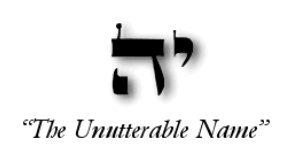
“It is generally thought that YAH is a shortened form of YHVH. This Name of God occurs about 50 times in the Tanakh. In Psalm 68:4 [5, H] this Name is particularly stressed. The Name YAH is also found in the construct word “hallelu-YAH,” which means “you [pl.] praise the LORD,” as well as in many Biblical proper names (e.g., Eliyahu).
The first occurrence of the Name YAH occurs in Exodus 15:2, where Moses and Israel sing a song regarding their deliverance from Pharoah’s horsemen:
 = ‘The LORD is my strength and song, and he is become my salvation.’
“YAH and YAH Constructs:
Yah. [The basic form. Note the Mappiq at the end of this Name.]
An abbreviated, an often poetic form of the Name YHVH. This Name appears over 50 times in the Tanakh, and is first used in Exodus 15:2 (see Ex. 15:2; 17:16; Psalm 68:5, 19; 77:12; 89:9; 94:7, 12; 102:19; 105:45; 106:1, Isa. 12:2; 26:4; 38:11, etc.).
For each name in the list below, I provide the following information:
1. The most common English transliteration 2. A definition for the name
1. Adonijah [Yah is my Lord]
2. Abijah [Yah is my father]
3. Achijah [Yah is my brother]
4. Urijah [Yah is my light]
5. Malchijah [Yah is my king]
6. Hodijah [Yah is my majesty]
7. Tovijah [Yah is my goodness]
8. Yiriyahu [Yah sees me]
9. Isaiah: Yeshayah [Salvation of Yah].
10. Jeremiah: Yirmyah. [Whom Yah has appointed].
“Yahweh, name for the God of the Israelites, representing the biblical pronunciation of “YHWH,” the Hebrew name revealed to Moses in the book of Exodus. The name YHWH, consisting of the sequence of consonants Yod, Heh, Waw, and Heh, is known as the tetragrammaton.
After the Babylonian Exile (6th century BCE), and especially from the 3rd century BCE on, Jews ceased to use the name Yahweh for two reasons. As Judaism became a universal rather than merely a local religion, the more common Hebrew noun Elohim (plural in form but understood in the singular), meaning “God,” tended to replace Yahweh to demonstrate the universal sovereignty of Israel’s God over all others. At the same time, the divine name was increasingly regarded as too sacred to be uttered; it was thus replaced vocally in the synagogue ritual by the Hebrew word Adonai (“My Lord”), which was translated as Kyrios (“Lord”) in the Septuagint, the Greek version of the Hebrew Scriptures.”
Well there it is folks. The Jews are indeed associated with this name ‘Yahweh’ and therefore the suggestion that the name ‘Yahweh’ means ‘Perverter’ fits like a glove doesn’t it? Isn’t it interesting how any similar spelling auto-corrects to ‘Yahweh’? What is also quite interesting about this entry is that it is plainly admitted that the true name ‘Elohim’ was too sacred to be uttered and thus we can see the beginning of concealing things from the plebs that the priesthood has consistently maintained. More importantly, we have a very simple definition of ‘Elohim’: plural in form but understood in the singular; two acting in concert as one. Sounds like Father and Son to me!
So, we therefore have the name we are really looking for don’t we? ‘Elohim’!
Or do we?
Thus, we can now understand the real meaning of the following verse of scripture so commonly misconstrued:
“Hear, O Israel: The LORD our God is one LORD:” Deuteronomy 6:4 KJV
‘Elohim’. Plural understood as one, or united in concert and purpose. Father and Son = one Lord.
“Who is a liar but he that denieth that Jesus is the Christ (anointed One)? He is antichrist, that denieth the Father and the Son. Whosoever denieth the Son, the same hath not the Father: (but) he that acknowledgeth the Son hath the Father also. Let that therefore abide in you, which ye have heard from the beginning. If that which ye have heard from the beginning shall remain in you, ye also shall continue in the Son, and in the Father.” 1John 2:22-24 KJV (brackets mine)
From Britannica:
“The Masoretes, who from about the 6th to the 10th century CE worked to reproduce the original text of the Hebrew Bible, added to “YHWH” the vowel signs of the Hebrew words Adonai or Elohim. Latin-speaking Christian scholars replaced the Y (which does not exist in Latin) with an I or a J (the latter of which exists in Latin as a variant form of I). Thus, the tetragrammaton became the artificial Latinized name Jehovah(JeHoWaH). As the use of the name spread throughout medieval Europe, the initial letter J was pronounced according to the local vernacular language rather than Latin.”
This is the tricky business of which David Andrew speaks. We are presented with the assertion that ‘Yahweh’ became ‘Jehovah’, yet it would easily make more sense that ‘Yahvah’ became ‘Jehovah’. That is to say that the ending of ‘Jehovah’ is more evidence of ‘Yahvah’ than ‘Yahweh’. As ‘Yahweh’ is what the Jews use we can probably dismiss it straight off the bat as perversion.
Now, thanks must be given to a conversation with a fellow that provided an interesting statement:
There are many proper names in the Old Testament affixed with yhv (yeho- or -yahu), and yhvh is the very name of God, which is known from inscriptions dated c. 830 BC. The Hebrew derivation of yhv is unclear, and scholars have suggested that it may have a non-Israelite origin, with some seeking meanings in Aramaic or Arabic or Egyptian. Although Sanskrit sources, where the same term is found with exactly the connotations appropriate to the biblical usage, have rarely been considered. Why did the followers of Abraham and Moses refer to their god as Yahweh? The evidence from Hebrew language seems rather slight. There was inter-marriage between Egyptian and Vedic cultures.
More importantly, Yahvah, the name of the God in the Judaic tradition, occurs as an epithet for Agni in the Rigveda a total of 21 times (yahva in RV 10.110; yahvah in RV 3.1, 3.5, 4.5, 4.7, 4.58, 5.1, 7.6, 7.8, 9.75, 10.11; yahvam in RV 1.36; 3.3; 4.5; 5.16; 8.13; 10.92; yahvasya in RV 3.2 and 3.28). Indus ideas on writing may thus have, through the agency of the powerful Mitanni kingdom of Syria, been influential in the various Semitic traditions of the second and first millennia BC.
Meaning of Sanskrit word “yahva” [1]
a.{a-stem}1. great; 2. active
meanings of “yahva” [2]
m.{a-stem}1. an employer of priests for sacrifices
meanings of “yahva” [3]
f.du.{a-stem}1. an epithet of heaven and earth; 2. of night of day; 3. of morning and evening
Yehovah is undoubtedly the same as the Chaldean Yahve and vedic Yahvah…
More from Strong’s about ‘Yah’:
“Yah: the name of the God of Israel
Original Word: יָהּ
Part of Speech: Proper Name
Transliteration: Yah
Phonetic Spelling: (yaw)
Definition: the name of the God of Israel
NAS Exhaustive Concordance
Word Origin
contr. from Yhvh
Definition
the name of the God of Israel
NASB Translation
GOD (1), LORD (49).”
“Lord is an appellation for a person or deity who has authority, control, or power over others, acting as a master, a chief, or a ruler.[1][2] The appellation can also denote certain persons who hold a title of the peerage in the United Kingdom, or are entitled to courtesy titles. The collective “Lords” can refer to a group or body of peers.”
So, the basic meaning of this is that ‘LORD’ is just a generic term or title. It signifies nothing specific until we make it do so, for example: ‘Our LORD Jesus Christ’. Nor is it a name. Yet, there it is stuck into ‘The Bible’. How did it get there? Yet, it is disingenuous as it is not specific. Worse, it possibly has legal implications being in all capital letters. As for ‘God’ it no doubt has political ramifications as it is regularly used in constitutional documents to mean several possible deities for various differing faiths; ‘God’ as a term is kind of like an all-you-can-eat buffet where you can have it whatever way you like and apparently it’s all good, equal, fair and nice. However, as ‘God’ is not actually a name and signifies nothing specific but is understood as a generic name for politically equivalent and interchangeable deities of various faiths then for example ‘The LORD God’ doesn’t really mean anything though just about everybody might think they have a firm idea of exactly who or what this ‘LORD God’ is. Ask them to explain it with any clarity and they will probably muddle out some drivel, or take you on a trip to who knows where that would of course be vastly different to somebody else’s trip. It would almost be like asking people to give you an account of a car crash. You’d wind up with a different story for each person yet supposedly each one would pertain to the same event.
“Who hath ascended up into heaven, or descended? who hath gathered the wind in his fists? who hath bound the waters in a garment? who hath established all the ends of the earth? what is his name, and what is his son’s name, if thou canst tell?” Proverbs 30:4 KJV
Folks, can one really understand the Scriptures if one doesn’t understand the ‘Elohim’; Father and Son? Furthermore, if you wouldn’t respond when someone else were calling you by the wrong name would the ‘Elohim’ respond if you weren’t using their right names? So, the next time somebody has a question or demonstrates basic confusion about who ‘God’ is the apostle Paul sets it out:
“For though there be that are called gods, whether in heaven or in earth, (as there be gods many, and lords many,) But to us there is but one God, the Father, of whom are all things, and we in him; and one Lord Jesus Christ, by whom are all things, and we by him.” 1 Corinthians 8:5,6 KJV
So, is that all sorted then?
No. There’s more:
“The prefix YAH is an abbreviation of Yahowah, the name of Elohim. The Bible makes great use of this short form. “Sha” means “Saves“, “saviour“. The whole name signifies “Yahu is salvation” or that “Yahowah Saves”. Miryam and Yoceph spoke Hebrew, not English or French. They gave Him a Hebrew name, Yahowsha, not Jesus. There is no J in Hebrew. All English speakers know that there was no J even in the English language until recently; 400 years, which is why they used to say Iesu. J is from the letter I. In the 1600’s they began to replace I by J at the beginning of a word. They got their J from French/German which borrowed it from Latin. It became a standard replacement for Y. We advise you to consult the many different encyclopaedias. The word Jesus is from the Greek Iesous (could be the name of a Greek god or where Greek placeholders were placed to tell the reader to insert and say (Yahowsha). The Latin speakers first rendered it as Iesus. Aramaic speakers rendered it Yeshua meaning “may his name and memory be obliterated, void of the Yahu the shorted form of the name of Yahowah completely missing Yahowah’s point of Yahowah Saves, Yahowsha.
Yahowah did not give His name to Moses as Adoni/Lord. Lord is a title, not a name; just like the word GOD is not a name. There are all kinds of GODS, and each one has their own name. This is why Moses said to Him, “Indeed, when I come to the children of Israel and say to them, ‘The Elohim (god) of your fathers has sent me to you,’ and they say to me, ‘What is His name?’ What shall I say to them?”, for the God of Egypt had a name; the God of the Canaanites had a name, too. “Which God sent you, Moshe? Ammon, Anubis, Nimrod, Zeus?” So Elohim spoke to Moses in Hebrew and told him, “You shall tell them YAHOWAH sent me.”
Many translators, knowing that you cannot translate only transliterate that blessed name of Elohim have wisely decided to keep the original name as it was given. No encyclopedia or dictionary will tell you that the Hebrews called Him Jehovah (which is purely a Britannic term; HOVAH means mischief, see Strong Concordance #1953 ), or Lord, the English translation for Baal and the title of England’s monarchical masters.
Very simply, let those who are intelligent ask themselves this, “If the name was too “ineffable” to be pronounced, why did Yahowah say to Moshe, ‘Tell them, My name is Yahowah. This is My name forever, and this is My memorial to all generations?” (Ex. 3:15). In Chapter 6 He further appeared to Moshe and said, “I am Yahowah. I appeared to Abraham, Isaac and Jacob, as Elohim Shaddai, but by My name Yahowah I was not known to them,” (or was I not known to them). And why in Numbers 6:22-27, He told Moshe to tell Aaron and his sons to always bless the children of Israel in this way, “Yahowah bless you and keep you; Yahowah makes His face shine upon you, and be gracious to you; Yahowah lift up His countenance upon you, and give you peace.‘ So they shall put My name on the children of Israel, and I will bless them.“ Isn’t that amazing? Today’s priests refuse to put Yahowahs’ name on Israel. No wonder our people are being overrun by enemies on all sides.” from “Why Do We Say Yahowah and Yahowsha?”
Finally, from a recent exchange:
“God tells us to know his name, tell our brethren of his name, proclaim his name, exalt his name, pray in his name, so as to be saved by his name. He says only one name saves. And let me know if you wanna see the verse that says if you don’t know God’s name, you’re not part of his family. He told us his name 7000 times. It’s either important to him or he is verbose. Whether you find it important or not simply doesn’t matter. Truth is never popular. I don’t care how you receive it.
“V” is a Rabbinical corruption. We KNOW his name because the root (Howah) forms THOUSANDS of Hebrew words and names. If “Yahowah” is wrong, the entire Hebrew language is wrong. What is annoying is the arrogance of people which, are linguistically illiterate and don’t know the difference between a WORD and a NAME. The Lamb, Father, Son, Messiah are all words or titles but not names. There is a huge difference. Names do not change with language. My name is “Shane” in every language on planet Earth. It doesn’t matter whether He knows all the names and languages. His name doesn’t change. Even the first KJV didn’t contain the name “Jesus”. Last time I checked, only one name saves.
His name wasn’t, isn’t and never will be “Jesus”. Thats impossible and thus STUPID. The letter “J” was INVENTED IN THE 16TH CENTURY. t’s a straightforward question from God (Proverbs 30:4). He asks what is his name and the name of his son. The point is that perhaps people shouldn’t proclaim “Jesus drops the veil and we will see in his timing” when they don’t even know God’s name. God tells us his name 7000 times in his message to mankind. Words do not get any clearer than “I am Yahowah. That is my name.” The Son had to come in His name to fulfil prophecy. “Yahowsha” is his son. The first time Jesus was ever written was 1629.” Shane Coombs
“For though there be that are called gods, whether in heaven or in earth, (as there be gods many, and lords many), But to us there is but one God, the Father Yahowah, of whom are all things, and we in him; and one Lord Yahowsha the Anointed, by whom are all things, and we by him.” 1 Corinthians 8:5,6 KJV (edit mine)
 Holy Bible Truth Seekers