
Editor’s Note: This ATJFTP Series was first written and published beginning in late 2017. Most recent update and revision January 2026.
“And I will put enmity between thee and the woman, and between thy seed and her seed; it shall bruise thy head, and thou shalt bruise his heel.” Genesis 3:15 KJV
Welcome to “ATJFTP 3: The Thorn In The Side”. So far, we’ve posted two parts in this series (“The Salary Men of Fake Jews” and “Who Is The Anti-Christ?”) In this post, we’re going to move on to new issues regarding the goings on of ‘Jews’ in the House of Judah. Encyclopaedia Britannica sets the stage for us:
“The era in which Jeremiah lived was one of transition for the ancient Near East. The Assyrian empire, which had been dominant for two centuries, declined and fell. Its capital, Nineveh, was captured in 612 by the Babylonians and Medes. Egypt had a brief period of resurgence under the 26th dynasty (664–525) but did not prove strong enough to establish an empire. The new world power was the Neo-Babylonian empire, ruled by a Chaldean dynasty whose best known king was Nebuchadrezzar. The small and comparatively insignificant state of Judah had been a vassal of Assyria and, when Assyria declined, asserted its independence for a short time. Subsequently Judah vacillated in its allegiance between Babylonia and Egypt and ultimately became a province of the Neo-Babylonian empire.”
We pick up the story of the demise of the “small and comparatively insignificant state of Judah” in decline and collapse in 2Kings 20 with God granting King Hezekiah 15 more years on account of his righteous ways. He is succeeded by Manasseh who is entirely wicked, so wicked in fact that God determines the end of Judah:
“And I will forsake the remnant of mine inheritance, and deliver them into the hand of their enemies; and they shall become a prey and a spoil to all their enemies;” 2Kings 21:14 KJV
We need to bear in mind that the House of Israel is already gone, carried away by Shalmanessar of Assyria in 723 BC.
“In the ninth year of Hoshea the king of Assyria took Samaria, and carried Israel away into Assyria, and placed them in Halah and in Habor by the river of Gozan, and in the cities of the Medes.” 2Kings 17:6 KJV
Let’s look at a timeline graphic. We won’t split hairs over the fine lines, but use it to get rough details sorted.
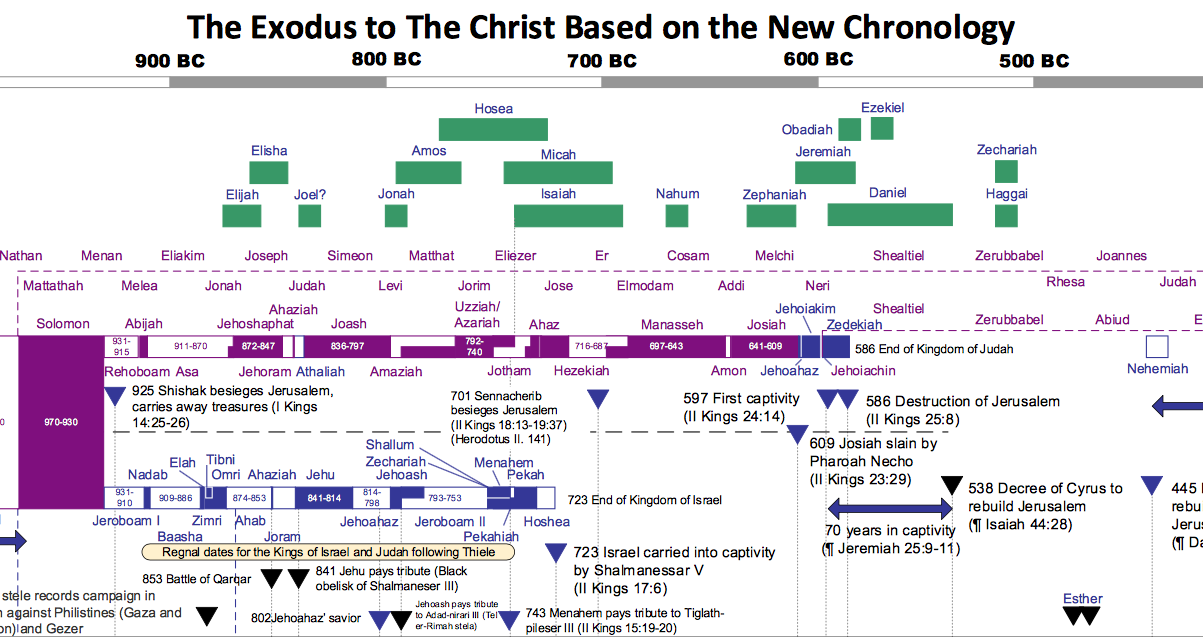
You can see for yourself, with the House of Israel gone all that remain of the Israelite tribes are in the House of Judah (Judah, Levi, Benjamin), and let’s just review what God has set in store for them:
“And I will forsake the remnant of mine inheritance, and deliver them into the hand of their enemies; and they shall become a prey and a spoil to all their enemies;” 2Kings 21:14 KJV
Things are not looking good!
Amon, succeeds his father and continues his idolatrous practices and pays the ultimate price for it:
“And the servants of Amon conspired against him, and slew the king in his own house.” 2Kings 21:23 KJV
At first blush not a lot seems to be known about this king Amon other than his continuation of heathen abominations. However, the question here is, who are the servants which, conspired and slew him? Was there a conspiracy against Amon due to his wicked ways? The answer to this question would most likely shed light on the internal struggles in the House of Judah as things continue to unravel. Most importantly we are told:
“And the people of the land slew all them that had conspired against king Amon; and the people of the land made Josiah his son king in his stead.” 2Kings 21:24 KJV
So, apparently the people of the land weren’t having it. Who were the people of the land? Are they Judah, or are they Canaanites? Was there a coup and it was overthrown? This seems quite an auspicious event for such little detail in scripture although, the place was falling apart. At any rate, Josiah is installed as King and it is during his reign as a righteous king that a book of the law is found. Upon hearing it read he rends his clothes and proceeds to utterly clean house in Judah (and also in Samaria), and then commands a Passover celebration:
“Surely there was not holden such a passover from the days of the judges that judged Israel, nor in all the days of the kings of Israel, nor of the kings of Judah;” 2Kings 23:22 KJV
Now, the notable thing for me about this celebration of Passover unlike any before or since, is that I had to wonder if this Passover celebration was a crucial event for Canaanites living in Judah at that time; did it give them exposure to rituals of Judah they would later seek to emulate?
Whatever the case may be on the developments of Canaanites in Judah, while there was never a king of Judah before or after that turned to God with all his heart and to the Law of Moses like Josiah, the fate of Judah was already sealed:
“Notwithstanding the LORD turned not from the fierceness of his great wrath, wherewith his anger was kindled against Judah, because of all the provocations that Manasseh had provoked him withal. And the LORD said, I will remove Judah also out of my sight, as I have removed Israel, and will cast off this city Jerusalem which I have chosen, and the house of which I said, My name shall be there.” 2Kings 23:26,27
Josiah dies and Jehoahaz reigns in his stead, doing evil in the sight of God. Pharaohnechoh of Egypt captures Jehoahaz to Egypt and installs Eliakim (another son of Josiah) as king of Judah under the pseudonym Jehoiakim. Jehoiakim proceeds to pay silver and gold to Pharaohnechoh before being confronted by Nebuchadnezzar of Babylon whom he had served three years before rebelling against him.
“And the LORD sent against him bands of the Chaldees, and bands of the Syrians, and bands of the Moabites, and bands of the children of Ammon, and sent them against Judah to destroy it, according to the word of the LORD, which he spake by his servants the prophets.” 2Kings 24:2 KJV
Jehoiakim dies and his son Jehoiachin reigns in his stead doing evil in the sight of God and that’s pretty much it folks. Jehoiachin reigns three months and then Nebuchadnezzar besieges the city of Jerusalem…
“And he carried away all Jerusalem, and all the princes, and all the mighty men of valour, even ten thousand captives, and all the craftsmen and smiths: none remained, save the poorest sort of the people of the land.” 2Kings 24:14 KJV (Underline mine)
Please note this is the first and essential capture of Judah with 10,000 captives, and none remained save the poorest sort of people of the land. It gets interesting here too:
“And the king of Babylon made Mattaniah his father’s brother king in his stead, and changed his name to Zedekiah.” 2Kings 24:17 KJV (Underline mine)
So, now we have the uncle of the king of Babylon ruling as King ‘Zedekiah’ in Jerusalem. Yet, 10,000 captives were taken and none remained save the poorest of the land. So who exactly was left for Zedekiah to rule over? (Editor’s note: the book of Chronicles has Zedekiah as the brother of the king of Babylon not his uncle):
“And when the year was expired, king Nebuchadnezzar sent, and brought him to Babylon, with the goodly vessels of the house of the LORD, and made Zedekiah his brother king over Judah and Jerusalem.” 2Chronicles 36:10 KJV (Underline mine)
After nine years Zedekiah (brother or nephew), rebels against Nebuchadnezzar. Jerusalem is besieged and Zedekiah suffers a brutal fate:
“And they slew the sons of Zedekiah before his eyes, and put out the eyes of Zedekiah, and bound him with fetters of brass, and carried him to Babylon.” 2Kings 25:7 KJV
“And the king of Babylon smote them, and slew them at Riblah in the land of Hamath. So Judah was carried away out of their land.” 2Kings 25:21 KJV
The last of Judah is carried away out of their land in this second capture nine years after the first. Then comes a significant development:
“And as for the people that remained in the land of Judah, whom Nebuchadnezzar king of Babylon had left, even over them he made Gedaliah the son of Ahikam, the son of Shaphan, ruler.” (Underline mine) 2Kings 25:22 KJV
The king of Babylon makes Gedaliah ruler over the residue of Jerusalem.
Now dear readers, why am I dragging you through all this? Well firstly, I’m inviting you to pick up the book and read it for yourself. Secondly, I’m attempting to get enough detail on the board so that we can get our heads on straight about what was afoot from 700-600 BC.
First, let’s go back to 2 Kings 18 and pick up the trail with Rabshakeh loudly in the Jews’ language:
“Then said Eliakim the son of Hilkiah, and Shebna, and Joah, unto Rabshakeh, Speak, I pray thee, to thy servants in the Syrian language; for we understand it: and talk not with us in the Jews’ language in the ears of the people that are on the wall.” 2Kings 18:26 KJV
“Then Rabshakeh stood and cried with a loud voice in the Jews’ language, and spake, saying, Hear the word of the great king, the king of Assyria:” 2Kings 18:28 KJV
What appears to be unfolding in the century from Hezekiah to Zedekiah is the progression of a rebellion, insurrection, or power grab of sorts within Judah. Given the usage of the word ‘Jews’ are we looking at a different people, or an internal rebellion of Judah being called ‘Jews’? That is, in one scenario the Canaanites of the land known as ‘Jews’ plot against the House Royal of Judah. In another scenario people of Judah proper are in active rebellion against the House Royal. The Canaanites have been a variable at play in the political intrigues of the land of Judah since the earliest days of Joshua when Israel did not slaughter them all down to the last child.
At first glance it doesn’t take long to get confirmation of the possibility of such intrigues at all.
“And when all the captains of the armies, they and their men, heard that the king of Babylon had made Gedaliah governor, there came to Gedaliah to Mizpah, even Ishmael the son of Nethaniah, and Johanan the son of Careah, and Seraiah the son of Tanhumeth the Netophathite, and Jaazaniah the son of a Maachathite, they and their men. And Gedaliah sware to them, and to their men, and said unto them, Fear not to be the servants of the Chaldees: dwell in the land, and serve the king of Babylon; and it shall be well with you. But it came to pass in the seventh month, that Ishmael the son of Nethaniah, the son of Elishama, of the seed royal, came, and ten men with him, and smote Gedaliah, that he died, and the Jews and the Chaldees that were with him at Mizpah.” 2Kings 25: 23-25 KJV (Underline mine)
So, when the armies of Judah hear about the installation of Gedeliah, Ishmael of the Royal Lineage returns to kill him, and the Jews and the Chaldees that were with him. That’s pretty defining stuff folks; ‘Jews’ in league with Chaldees against the House Royal of Judah. Is that actually the case? Or, are we really just battling typo problems here; translation errors that have produced a new word and a new people ‘Jews’? Should all of these verses read ‘Judeans’ or ‘Judah’ when they have instead ‘Jews’?
From the time of Rabshakeh to this killing of Gedaliah the kingdom of Judah is obviously corrupt, blasphemous and weak with plots and intrigues, ambitions, the murder of Amon (perhaps a failed coup?), the installation of Zedekiah and finally Gedaliah and the subsequent return of Ishmael of the seed royal to clean out the plotters and usurpers; the ‘Jews’. Is that the case? Or are we really just dealing with a rebel group of Judeans?
Now who is this Gedaliah fellow? As of this writing I haven’t stumbled upon too much scriptural reference to be dead certain, but here is what ye ol’ Britannica has to say on the matter:
“Fast of Gedaliah, a minor Jewish observance (on Tishri 3) that mournfully recalls the assassination of Gedaliah, Jewish governor of Judah and appointee of Nebuchadrezzar, the Babylonian king. Gedaliah, a supporter of Jeremiah, was slain by Ishmael, a member of the former royal family of Judah. When the remaining Jews fled to Egypt, Jewish self-rule was thus effectively ended.”
Well, it appears the Jews claim this guy as one of their own and he is not noted as being of Judah, but a Jewish governor of the state of Judah and that obviously the Royal Family had been deposed. Notice too it clearly states “Jewish self-rule.” Folks if Jews were of Judah hadn’t they just had self-rule for over 200 years since the demise of the united kingdom of David and the formation of the House of Judah? Or, are we just looking at corruption in the Britannica too with more promotion of the idea that ‘Jews’ are of Judah?
A member of the royal family of Judah kills Gedaliah and “Jewish self-rule is effectively ended“. Is that so? Or does that simply mean that with typo corrected ‘self-rule of Judeans’ is ended and Babylon tales control over the area? In either case the remaining ‘Jews’ or ‘Judeans’ flee down to Egypt; they were not taken to Babylon. (Just for your further inquiry here are one and two different takes on what further transpired with Jeremiah.)
More confirmation of the political intrigues in the last days of Judah are found in the book of Jeremiah:
“And Zedekiah the king said unto Jeremiah, I am afraid of the Jews that are fallen to the Chaldeans, lest they deliver me into their hand, and they mock me.” Jeremiah 38:19 KJV
Zedekiah appears to confirm a group of ‘Jew’ plotters in league with the Chaldeans or are we really just looking at a typo corruption; Zedekiah is actually worried about turncoat ‘Judeans’ in league with the Chaldeans? If it is ‘Jews’, does such plotting date back to 2 Kings 18 with the taunt of Rabshakeh for the Jews to side up with Assyria against the royal House of Judah?
“Then Rabshakeh stood and cried with a loud voice in the Jews’ language, and spake, saying, Hear the word of the great king, the king of Assyria: Thus saith the king, Let not Hezekiah deceive you: for he shall not be able to deliver you out of his hand: Neither let Hezekiah make you trust in the LORD, saying, The LORD will surely deliver us, and this city shall not be delivered into the hand of the king of Assyria. Hearken not to Hezekiah: for thus saith the king of Assyria, Make an agreement with me by a present, and come out to me, and then eat ye every man of his own vine, and every one of his fig tree, and drink ye every one the waters of his cistern: 2Kings 18:28-31 KJV
Or is this really Ranshakeh speaking in the ‘Judean’ language so as to sew insurrection against the Royal House of Judah?
There appears to be an agreement made and in good working order:
“And Gedaliah the son of Ahikam the son of Shaphan sware unto them and to their men, saying, Fear not to serve the Chaldeans: dwell in the land, and serve the king of Babylon, and it shall be well with you. As for me, behold, I will dwell at Mizpah to serve the Chaldeans, which will come unto us: but ye, gather ye wine, and summer fruits, and oil, and put them in your vessels, and dwell in your cities that ye have taken. Likewise when all the Jews that were in Moab, and among the Ammonites, and in Edom, and that were in all the countries, heard that the king of Babylon had left a remnant of Judah, and that he had set over them Gedaliah the son of Ahikam the son of Shaphan; Even all the Jews returned out of all places whither they were driven, and came to the land of Judah, to Gedaliah, unto Mizpah, and gathered wine and summer fruits very much. Jeremiah 40:9-12 KJV (Underline mine)
So, is this ‘Jews’ coming to the land of Judah; to seize an opportunity or ‘Judeans’? This Gedaliah fellow seems pretty content to be a traitor and serve the Chaldeans. It is interesting to note Gedaliah appears to be of the scribes.
“And it came to pass in the eighteenth year of king Josiah, that the king sent Shaphan the son of Azaliah, the son of Meshullam, the scribe, to the house of the LORD, saying,” 2Kings 22:3 KJV
“Even they sent, and took Jeremiah out of the court of the prison, and committed him unto Gedaliah the son of Ahikam the son of Shaphan, that he should carry him home: so he dwelt among the people.” Jeremiah 39:14 KJV
So, just to straighten up that lineage it goes like this:
Meshullam > Azaliah > Shaphan > Ahikam > Gedaliah.
We can see that Meshullam was a scribe, so that role should carry on such is monarchy with families fulfilling certain roles down through the generations no yes? Were these scribes ‘Jews’? Had they been brought into service of the House of Judah? Or are we yet again just being confounded by typo errors and it should all just read ‘Judeans’?
Just for reference here is what Jeremiah has to say about the scribes:
“How do ye say, We are wise, and the law of the LORD is with us? Lo, certainly in vain made he it; the pen of the scribes is in vain. The wise men are ashamed, they are dismayed and taken: lo, they have rejected the word of the LORD; and what wisdom is in them?” Jeremiah 8:8,9 KJV
So, what is recorded in the pages of the KJV are either ‘Jews’ (Canaanites), attempting to seize control of Jerusalem or, ‘Jews’ being used in place of ‘Judeans’; an internal fight in the State of Judah. Game of Thrones eat your heart out.
So, let’s note that the reality of Jerusalam is made perfectly clear in the book of Joshua:
“As for the Jebusites the inhabitants of Jerusalem, the children of Judah could not drive them out: but the Jebusites dwell with the children of Judah at Jerusalem this day.” Joshua 15:63 KJV
Now, perhaps I’ve got Gedaliah wrong but it appears that he became a turncoat of sorts in the house of Judah making his oaths of servitude to the Chaldeans. This would have been akin to swearing an oath to serve Danes during the reign of Alfred the Great! Folks, we need to think in terms of kith and kin, family, lineage and blood rivalry; Royal Lineage.
Now, I will presume hotheads and ‘scholars’ will simply say “The Jews are God’s chosen people!!” “There are no typo errors. The ‘Jews’ are Judah”.
So, in lieu of such imagined claims, and due to the turbulent times in Judah that we have looked at I decided I would get stuck into the book of Jeremiah to see what I could find to either confirm the record or reveal errors in my interpretation. Lo and behold what I found was most interesting because in my humble opinion the book of Jeremiah is God’s riot act being read upon His people.
The first thing I made a general note of that was significant enough to be shared with you here however, is that there are precious few mentions of ‘Jews’ amidst countless mentions of Israel, Judah, Jerusalem and the God of Israel throughout the book of Jeremiah. Indeed!
So, let’s look at something that first caught my eye in Jeremiah 34.
There are 33 translations of the Bible on BibleHub. (How Masonic.) Therefore, I thought it would be good to reference a few different versions just to spread the love around and see if perhaps such a way of fleshing it out might help us get a better grip on what is afoot in Judah:
“The word came to Jeremiah from the Lord after King Zedekiah had made a covenant with all the people in Jerusalem to proclaim freedom for the slaves. Everyone was to free their Hebrew slaves, both male and female; no one was to hold a fellow Hebrew in bondage.” Jeremiah 34:8,9 NIV
“This message came to Jeremiah from the LORD after King Zedekiah made a covenant with the people, proclaiming freedom for the slaves. He had ordered all the people to free their Hebrew slaves—both men and women. No one was to keep a fellow Judean in bondage.” Jeremiah 34:8,9 NLT
“After King Zedekiah had made a covenant with all the people in Jerusalem to proclaim liberty, the word came to Jeremiah from the LORD that each man should free his Hebrew slaves, both male and female, and no one should hold his fellow Jew in bondage.” Jeremiah 34:8,9 BSB
“The word that came to Jeremiah from the Lord, after that king Sedecias had made a covenant with all the people in Jerusalem making a proclamation: That every man should let his manservant, and every man his maidservant, being Hebrew man or a Hebrew woman, go free: and that they should not lord it over them, to wit, over the Jews their brethren.” Jeremiah 34:8,9 Douay-Rhyms
“This is the word that came unto Jeremiah from the LORD, after that the king Zedekiah had made a covenant with all the people which were at Jerusalem, to proclaim liberty unto them; That every man should let his manservant, and every man his maidservant, being an Hebrew or an Hebrewess, go free; that none should serve himself of them, to wit, of a Jew his brother.” Jeremiah 34:8,9 KJV
“The word that came unto Jeremiah from the LORD, after that the king Zedekiah had made a covenant with all the people that were at Jerusalem, to proclaim liberty unto them that every man should let his manservant, and every man his maidservant, being a Hebrew man or a Hebrew woman, go free; that none should make bondmen of them, even of a Jew his brother.” Jeremiah 34:8,9 Mechon-Mamre
Well, we can see there is discrepancy. So, let’s note the translations that state ‘Jews’ (BSB, Douay-Rhyms, KJV. Mechon-Mamre). The big ‘mainstream’ ‘official’ texts. Interestingly, the NLT has obviously done some digging and used ‘Judean’, which of course is more accurate. Perhaps the most infuriating development of this last few centuries has been the basic flipping of priorities, or inverting of historical order. Jacob/Israel came first, then Israelites, of which one tribe was Judah. Yet these days the new dogma says ‘Jews’ came first. The rest? Meh.
Whatever the case the covenant with “all the people, which were at Jerusalem” doesn’t last long:
“But afterward they turned, and caused the servants and the handmaids, whom they had let go free, to return, and brought them into subjection for servants and for handmaids.” Jeremiah 34:11 KJV
Is it just I or is there a voice of the people being expressed here? We’ve already seen that those, which plotted and killed Amos were overthrown by the people and here again, the proclamation is given short shrift.
BTW have we determined exactly who are these people “which were at Jerusalem”? Obviously they are not all of Judah, or they would be referred to as such. Does Isaiah clear up the issue?
“The vision of Isaiah the son of Amoz, which he saw concerning Judah and Jerusalem in the days of Uzziah, Jotham, Ahaz, and Hezekiah, kings of Judah.” Isaiah KJV 1:1
“Your country is desolate, your cities are burned with fire: your land, strangers devour it in your presence, and it is desolate, as overthrown by strangers.” Isaiah 1:7 KJV (underline mine)
Now, perhaps verse seven is referring to a later fate of the state of Judah, but reading it straight through from the beginning (and you are most welcome to do so to check for yourself), it seems pretty clear that those words apply to the state of Judah in real time during the reigns of Uzziah, Jotham, Ahaz, and Hezekiah (792 BC – 687 BC), which predate these events during the reign of Zedekiah (586 BC), by some 100-200 years. So, it would seem that strangers indeed overrun Judah for some considerable period to the eventual demise of Zedekiah.

“Wherefore I also said, I will not drive them out from before you; but they shall be as thorns in your sides, and their gods shall be a snare unto you.” Judges 2:3 KJV
Now, while I would place odds on those strangers being Canaanites there may be more to the story. Regardless, there are many striking parallels from this period of collapse in Judah to the ‘Baby-Boom’ era we have been living through; corruption, decadence, spiritual drift, weak leaders, internal divisions and of course being overrun by strangers in our own lands.
As to the question of whether this word ‘Jew’ is to indicate a foreign people, possibly Canaanites, or just a wicked typo in place of ‘Judean’ we will leave it here and resolve the issue in Part 4. Thanks for sticking with it.
 Holy Bible Truth Seekers
Pingback: All The Jews Fit To Print 2: Who Is The Anti-Christ? – Holy Bible Truth Seekers
Pingback: All The Jews Fit To Print 4: What’s In A Name? – Holy Bible Truth Seekers