

“So, Jesus left you lonely. Feels like nothing’s really holy. Calling. No one hears your calling. Falling. Everything is falling.” Salvation. Black Rebel Motorcycle Club
Now straight off, thanks must be given to BenBornAgain for coining this very term ‘Hebrew Name-Game’ in his seminal work
‘Jesus Never Called God YHVH: The Hebrew Kabbalah Name-Game’
Fair call mate. Fair call indeed. I mean, what’s with this YHVH stuff anyway?
I remember the very first time I ever heard the name ‘Yahweh’. It conjured a scene in my mind of a rather large, hard, ominous, and even malevolent man, very grave and serious, hurling this name ‘Yahweh’ to the heavens in deep tones like a wizard trying to cast a spell.

However, the fellow in the vision looked a little more like this:
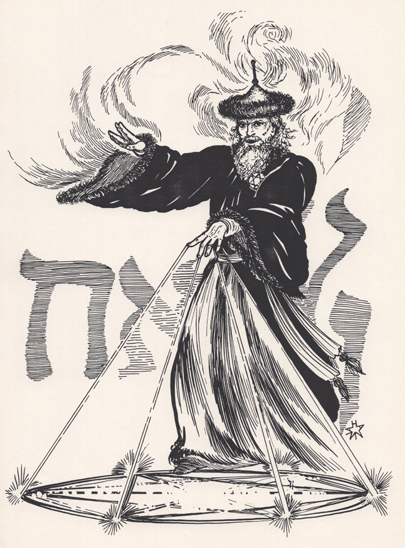
Or better yet, this:

Yet, what was the ‘Yahweh’ business really about? What does it have to do with the new YHVH campaigns? Well, if you said ‘jamming transmissions’, ‘flooding the zone’ or ‘spiritual warfare’ I’d say you were on solid ground. I’d also suggest that such ‘arts’ of non-kinetic warfare abound and that there are visual and logo assaults daily. For example:

The simple globe programming being presented here is of course anti-God/anti-Creation Pro-Evolution/Atheism/Marxism. How many nominal ‘christians’ now carry some muddle of such ideas in their head which, being encountered daily challenge their faith daily and confuse their understanding of God? How many, when they see this proposition at the start of any movie they watch believe this globe earth model is true and don’t question it? After all, why would somebody lie about it? Can’t we just go through life like naive little children happily believing everything we see and hear? How many nominal ‘christians’ do not recognise that the movie they are watching is being produced by those which, declare a different god or none? How many people (regardless spiritual orientation), now go about on a day-to-day basis (having seen countless images like this one above), believing that indeed they live on a giant spinning ball hurtling through space as per the latest NASA universe model? Think about if folks. With absolutely no proof whatsoever, but just the constant repetition of carefully constructed images, a whole new mindset that was given very simple articulation in Grade 3 has been created and is constantly reinforced. God and His Creation have been effectively displaced and supplanted in the minds of millions. Can you say ‘spelling’? Or is that spell casting?
Well, whatever is going on with the promotion of this ‘Yahweh’ YHVH, there was subsequently the first time I encountered a name for Jesus I had never heard of before that I wondered if I should actually know. Since at that time for the first time in my life I was really discovering religious theology I was intrigued. However, I can’t say I ever really understood the point of this name I was first made aware of some time in 2015 from a fellow whose website was unlike anything I had ever experienced. The subtitle for the website featured a name for Jesus I had never heard before: ‘Yashua’.
Most of the time spent in dialogue with the author of this blog was on historical aspects of scripture and the history of the Israelite people. The name ‘Yashua’ was used by the author regularly, but did not occasion any particular discussion with the exception of one remark which, if I am correct in my recollection was that Jesus was really ‘Joshua’. Hence, ‘Yashua’ as there was no ‘J’ sound in Hebrew/Aramaic. I had no ability to confirm or deny any such assertion.
Sometime after that, I discovered yet a different name in the Aramaic Peshitta translated by Ewan MacLeod, ‘Jeshu’. Then knowing there was no ‘J’ sound, I pronounced this when I read it as ‘Yeshu’.
Yet some time after that another question arose on the topic of, wait for it, ‘Yahweh’ as the author of the blog stated he didn’t like it. At that point I was still largely uninterested in this topic, considering ‘Yahweh’ trivial distraction from more important questions.
Nonetheless, as things would have it I had occasion to be poking about in various legal matters at that time, which, in due course led me to an obscure book ‘The Temple of Baal’ by Sir David Andrew. This book is quite forthright reading particularly if you are inclined to a rare and possibly outrageous look at the more occult inner workings of Law Society courts. So eyebrow raising is this reading in fact, I’ll let you do a little yourself just to get us going here:
“Do you really want to play cards at their table? ‘Expert witness‘ means someone with a sheep’s skin, who agrees with the party paying for their services. Welcome to the Fascist States of the United States, a British Crown Slave State or Plantation. The black-robed devil (false accuser) is GOD (false deity, demon) [Vicarius Dei = substitute for deity]. The Defence Attornor is the Vicarius Filii Dei [substitute for the son of deity] All other officers are lesser deities. Therefore, stop using the term God. PERIOD. What part of the word stop <STOP> do you not comprehend? God = Gaud (old English) = Gâd (Hebrew, SH #1408 and 1409) = the deity of good luck, good fortune, or troops; a deity of Babylon (The Masonic Luciferian Idol, which stands in New York Harbour). You ask any black-robed devil for your ‘God-given rights’ and he will give them to you, maybe even 5 to 10 in one of their iron bar hotels or dungeons. Get the point! One is hung by their own tongue. They do not speak English. Devil (SG #1228) = false accuser. Idols = demons (SG #1140) = idols, false deities. The term GOD is not synonymous or interchangeable with the term deity, since GOD is the name of a false deity, a demon. never does the term GOD mean or apply to The Creator. Never!” The Temples of Baal.
Naturally, having come across these propositions, I decided I would have to investigate!
‘But what does this have to do with ‘Yahweh’?’ I hear you ask.
Well, hold on a minute. We’ll get there. But first, let’s just get into a quick tour of the claims on the various terms put forth by the author Sir David Andrew.
Here is a definition of Gad from Bible Tools:
“fortune; luck.”
Followed by another from Bible Tools:
“(gadh, “fortune”): A god of Good Luck, possibly the Hyades. The writer in Isaiah 65:11 (margin) pronounces a curse against such as are lured away to idolatry… …Nothing is known of a Babylonian deity named Gad, but there are Aramean and Arabic equivalents. The origin may have been a personification of fortune and destiny, i.e. equivalent to the Fates… …Canaanitish place-names also attest the prevalence of the cult, as Baal-gad, at the foot of Hermen (Joshua 11:17; Joshua 12:7; Joshua 13:5); Migdal-gad, possibly Mejdel near Askalon (Joshua 15:37); Gaddi and Gaddiel (Numbers 13:10 f.). In Talmudic literature the name of Gad is frequently invoked…”
Another was found in Strong’s:
“1408 Gad gad a variation of 1409; Fortune, a Babylonian deity:–that troop.”
Ok. With that in mind, and before we press on, given the way people throw around this term ‘god’ (“Oh my god!!!” “God damn it!”) would it be accurate to say they might as well be talking about luck and fortune as if they just won a lottery or were completely shocked by a certain turn of events?
Now, just for those of you interested in legal matters, here before we press on, are some more choice words from Sir David Andrew:
“Side NOTE: The term christ is a verb and means “to anoint”. A verb cannot be the subject or object of a sentence. The term Christian (Gr) = Messiah (Heb) = the Anointed. The term “Christians” means heirs of the Anointed.
Christians cannot or should not enter at the gates of Baal, nor into contracts with devils [e.g.– signing into the iron bar hotel, posting bail, the hiring of an Attorney or plea bargaining]. Christians can give or sign ‘asseverations’ or ‘declarations of truth’ in the form of Affidavits {28 USC 1746 (1)}. If at all possible, Christians must stand firm in ‘commons’ and not go in at bar. It is best to do everything in writing beforehand, outside the sanctuary of the Temples of Baal.” The Temples of Baal.
So there you have it folks. Stay out of Dodge if you know what’s good for you.
‘But what does this have to do with ‘Yahweh’?’ I hear you complain.
Well, now we get to it. Sir David Andrew continues…
“The Creator’s name is Yah, which means most vehement (The Source). {Strong 3050} The term Yahavah (or Yahvah) is a title, which means Creator or Yah the Self existing One. {Strong 1934}”
Strong’s 3050:
“3050 Yahh yaw contraction for 3068, and meaning the same; Jah, the sacred name:–Jah, the Lord, most vehement. Compare names in “-iah,” “- jah.””
Strong’s 3068:
“3068 Yhovah yeh-ho-vaw’ from 1961; (the) self-Existent or Eternal; Jehovah, Jewish national name of God:–Jehovah, the Lord. Compare 3050, 3069.”
Strong’s 1934:
“1934 hava’ hav-aw’ (Aramaic) orhavah (Aramaic) {hav-aw’}; corresponding to 1933; to exist; used in a great variety of applications (especially in connection with other words):–be, become, + behold, + came (to pass), + cease, + cleave, + consider, + do, + give, + have, + judge, + keep, + labour, + mingle (self), + put, + see, + seek, + set, + slay, + take heed, tremble, + walk, + would.”
Ok, as we could probably spend all day mucking about in Strong’s with our eyes glazing over once again here is Sir David Andrew:
“In 3068 through 3074 Strong promotes the Jewish (Zionist) Talmudic lie of Luciferianism, by deliberate misspelling of these terms or titles.”
(Click on this link for a list of Strong’s 3068-3074 re: Sir Andrew citing Zionist Talmudic Luciferian lies.)
Ok. Now that is a fair claim and considerable; deliberate misspelling of terms and titles. Let’s note that because there is yet more to come from Sir David Andrew:
“The following two terms are of modern man’s creation. These are names of a false deity of the Luciferian and Fellow Travellers. Yah-hovah (Je-ho-vah) means Yah ruins. [destroyer] {Strong 1943}. Yah-havvah (Yahweh) means Yah covets. [perverter] {Strong 1942} Having the sense or meaning of being perverted. I think not! Changing of “a” to “o” or doubling “v” changes the term and meaning. YHVH means Creator, YHWH means perverter. Those who teach YHWH means Creator are perverters of truth. Arguing that these terms have same meaning, is as foolish as arguing that “see” and “sea” have same meaning.” The Temples of Baal.
Here is Strongs 1943:
“1943 hovah ho-vaw’ another form for 1942; ruin:–mischief. 1942 havvah hav-vaw’ from 1933 (in the sense of eagerly coveting and rushing upon; by implication, of falling); desire; also ruin:–calamity, iniquity, mischief, mischievous (thing), naughtiness, naughty, noisome, perverse thing, substance, very wickedness.”
Ok. Well, the plot had definitely thickened by this point and perhaps it has now for you too dear reader? However, if I recall correctly the trail went cold there. That was it from Sir David Andrew. Indeed, he was certainly forthright in his views and as you can see, quite well justified by ye old Strong’s Concordance.
So next, to keep things rolling I dug around and wound up on a site (Hebrew 4 Christians) that offered the following:
“It is generally thought that YAH is a shortened form of YHVH. This Name of God occurs about 50 times in the Tanakh. In Psalm 68:4 [5, H] this Name is particularly stressed. The Name YAH is also found in the construct word “hallelu-YAH,” which means “you [pl.] praise the LORD,” as well as in many Biblical proper names (e.g., Eliyahu).
The first occurrence of the Name YAH occurs in Exodus 15:2, where Moses and Israel sing a song regarding their deliverance from Pharoah’s horsemen:

= ‘The LORD is my strength and song, and he is become my salvation.’
YAH and YAH Constructs:
Yah. An abbreviated, an often poetic form of the Name YHVH. This Name appears over 50 times in the Tanakh, and is first used in Exodus 15:2 (see Ex. 15:2; 17:16; Psalm 68:5, 19; 77:12; 89:9; 94:7, 12; 102:19; 105:45; 106:1, Isa. 12:2; 26:4; 38:11, etc.).
For each name in the list below, I provide the following information:
1. The most common English transliteration 2. A definition for the name
1. Adonijah [Yah is my Lord]
2. Abijah [Yah is my father]
3. Achijah [Yah is my brother]
4. Urijah [Yah is my light]
5. Malchijah [Yah is my king]
6. Hodijah [Yah is my majesty]
7. Tovijah [Yah is my goodness]
8. Yiriyahu [Yah sees me]
9. Isaiah: Yeshayah [Salvation of Yah].
10. Jeremiah: Yirmyah. [Whom Yah has appointed].
Ok, now I don’t know about you but to my mind those ideas seem pretty sound. That is to say that the names of the various prophets to Israel were all derivations on the mighty name of the Creator and deliverer ‘Yah’.
So, with all of that being thrown into the bargain it was time to try and set things straight with a little help from our friends at Britannica:
“Yahweh, name for the God of the Israelites, representing the biblical pronunciation of “YHWH,” the Hebrew name revealed to Moses in the book of Exodus. The name YHWH, consisting of the sequence of consonants Yod, Heh, Waw, and Heh, is known as the tetragrammaton.
After the Babylonian Exile (6th century BCE), and especially from the 3rd century BCE on, Jews ceased to use the name Yahweh for two reasons. As Judaism became a universal rather than merely a local religion, the more common Hebrew noun Elohim (plural in form but understood in the singular), meaning “God,” tended to replace Yahweh to demonstrate the universal sovereignty of Israel’s God over all others. At the same time, the divine name was increasingly regarded as too sacred to be uttered; it was thus replaced vocally in the synagogue ritual by the Hebrew word Adonai (“My Lord”), which was translated as Kyrios (“Lord”) in the Septuagint, the Greek version of the Hebrew Scriptures.”
So there we have it, and from Britannica no less. Firstly, there is no question on this ‘Yahweh’ name; it is just presented as fact. Is Sir David Andrew insane or are the fine folks at Britannica deceived and not checking the checking that we have already checked? Or, are they of the view that this is all old poppycock at any rate so who cares?
Next, there is a rough introduction to something called the Tetragrammaton; Yod, Heh, Waw and Heh. We should also note this because for some reason what looks like YHWH is always rendered YHVH. Hmmm.
Then come some observations about the post-Babylon growth of Judaism beyond the borders of Jerusalem and Judah which, is accompanied by the use of a new name: ‘Elohim’ (plural in form understood as one – two acting in concert as one. Sounds like Father and Son to me. Does that sound like Father and Son to you?).
Lastly, there is presentation of the idea that the name of God became too sacred to be spoken or unutterable.
All very interesting indeed and it makes me wonder how such an explanation ever made it into the pages of the Britannica and by whom was it produced?
That today’s Jews are indeed associated with this name ‘Yahweh’ and the suggestion that the name ‘Yahweh’ means ‘Perverter’ fits like a glove, doesn’t it?
What is also of interest is how any similar spelling auto-corrects to ‘Yahweh’? Try it on any search engine or writing software and you’ll see. Now, that’s power and reach. That’s propaganda with an A+. That’s control of the narrative. Ai will ensure compliance. Indeed.
At any rate, though I’m currently not sure about this word ‘Elohim’ and it’s actual origins, it does set up a better understanding of the following verse of scripture so commonly misconstrued:
“Hear, O Israel: The LORD our God is one LORD:” Deuteronomy 6:4 KJV
‘Elohim’. Plural understood as one. Two united in concert and purpose. Father and Son. One Lord.
“Who is a liar but he that denieth that Jesus is the Christ? He is antichrist, that denieth the Father and the Son. Whosoever denieth the Son, the same hath not the Father: (but) he that acknowledgeth the Son hath the Father also. Let that therefore abide in you, which ye have heard from the beginning. If that which ye have heard from the beginning shall remain in you, ye also shall continue in the Son, and in the Father.” 1John 2:22-24 KJV
Then there is more from Britannica:
“The Masoretes, who from about the 6th to the 10th century CE worked to reproduce the original text of the Hebrew Bible, added to “YHWH” the vowel signs of the Hebrew words Adonai or Elohim. Latin-speaking Christian scholars replaced the Y (which does not exist in Latin) with an I or a J (the latter of which exists in Latin as a variant form of I). Thus, the tetragrammaton became the artificial Latinised name Jehovah (JeHoWaH). As the use of the name spread throughout medieval Europe, the initial letter J was pronounced according to the local vernacular language rather than Latin.”
Now, here we come to the tricky business of which Sir David Andrew speaks. We are presented with the Masoretes (heirs of the Pharisees), reproducing (re-writing?) the Hebrew scriptures 6 to 10 centuries after Christ, adding to YHWH the vowel signs of Hebrew words Adonai and Elohim, replacing the ‘Y’ with ‘I’ or ‘J’ and the assertion that ‘Yahweh’ became ‘Jehovah’.
Some, glossing over all of these various problems probably from falling for what can only be called ‘Hebrew idolatry’ (thanks again to ‘Ben Born Again’ for dubbing it so), would argue that ‘Yahvah’ became ‘Jehovah’ and that the name ‘Yahweh’ should actually be ‘Yahvah’.
Are we beginning to split hairs here?
I’m not sure how Yod Heh Wah Heh become ‘Yahvah’. Is ‘Yahvah’ worth anything more than ‘Yahweh’? Or is this exactly the ‘Hebrew idolatry’ BenBornAgain has fingered; the idea that because it’s Hebrew it is somehow authoritative, and carries some secret knowledge and therefore trumps something so erroneous and silly as ‘Jesus’ in pitiful English? The implication being that if you don’t know this lost name you don’t know anything!!!

So, while there were apparently two camps, the ‘Yahweh’ camp and the ‘Yahvah’ camp, I was not convinced of either, considering it still to be a whole lot of mumbo-jumbo. I left the matter to rest and thought nothing more of it until I was duly challenged almost two years later by a rather forthright fellow on the very topic of the name of God. More specifically I was put on the spot of whether I knew the answer to the following proverb:
“Who hath ascended up into heaven, or descended? who hath gathered the wind in his fists? who hath bound the waters in a garment? who hath established all the ends of the earth? what is his name, and what is his son’s name, if thou canst tell?” Proverbs 30:4 KJV
Now, not having ever really given this particular Proverb much thought I had to immediately recognise the gravity of the question. I maintain that the question is more important than the answer but before we get to that let’s have a listen to Mr Shane Coombs on this topic:
“God tells us to know his name, tell our brethren of his name, proclaim his name, exalt his name, pray in his name, so as to be saved by his name. He says only one name saves. And let me know if you wanna see the verse that says if you don’t know God’s name, you’re not part of his family. He told us his name 7000 times. It’s either important to him or he is verbose. Whether you find it important or not simply doesn’t matter. Truth is never popular. I don’t care how you receive it.
“V” is a Rabbinical corruption. We KNOW his name because the root (Howah) forms THOUSANDS of Hebrew words and names. If “Yahowah” is wrong, the entire Hebrew language is wrong. What is annoying is the arrogance of people which, are linguistically illiterate and don’t know the difference between a WORD and a NAME. The Lamb, Father, Son, Messiah are all words or titles but not names. There is a huge difference. Names do not change with language. My name is “Shane” in every language on planet Earth. It doesn’t matter whether He knows all the names and languages. His name doesn’t change. Even the first KJV didn’t contain the name “Jesus”. Last time I checked, only one name saves.
His name wasn’t, isn’t and never will be “Jesus”. Thats impossible and thus STUPID. The letter “J” was INVENTED IN THE 16TH CENTURY. t’s a straightforward question from God (Proverbs 30:4). He asks what is his name and the name of his son. The point is that perhaps people shouldn’t proclaim “Jesus drops the veil and we will see in his timing” when they don’t even know God’s name. God tells us his name 7000 times in his message to mankind. Words do not get any clearer than “I am Yahowah. That is my name.” The Son had to come in His name to fulfil prophecy. “Yahowsha” is his son. The first time Jesus was ever written was 1629.” Shane Coombs
Ok, Well fair dinkum on that and many salient points raised there. Too many to go into but I couldn’t really argue any of them at any rate. So, here then folks, I was first a presented with the idea that ‘Yahweh’ is indeed a bunch of garbage and no, not because it should be ‘Yahvah’ but because it should actually be, wait for it, ‘Yahowah’.
Wow!
I was a bit gobsmacked to say the least. Not only had I never heard of this before, not only had anybody ever heard this before, but it is so obvious! It’s not ‘Jehovah’ but ‘Yahowah’.
So, since this name was so very new to my world I simply had to check if there were indeed other sources which, cited it. This is what I found on the first search:
“The prefix YAH is an abbreviation of Yahowah, the name of Elohim. The Bible makes great use of this short form. “Sha” means “Saves”, “saviour”. The whole name signifies “Yahu is salvation” or that “Yahowah Saves”. Miryam and Yoceph spoke Hebrew, not English or French. They gave Him a Hebrew name, Yahowsha, not Jesus. There is no J in Hebrew. All English speakers know that there was no J even in the English language until recently; 400 years, which is why they used to say Iesu. J is from the letter I. In the 1600’s they began to replace I by J at the beginning of a word. They got their J from French/German which borrowed it from Latin. It became a standard replacement for Y. We advise you to consult the many different encyclopaedias. The word Jesus is from the Greek Iesous (could be the name of a Greek god or where Greek placeholders were placed to tell the reader to insert and say (Yahowsha). The Latin speakers first rendered it as Iesus. Aramaic speakers rendered it Yeshua meaning “may his name and memory be obliterated, void of the Yahu the shorted form of the name of Yahowah completely missing Yahowah’s point of Yahowah Saves, Yahowsha.
Yahowah did not give His name to Moses as Adoni/Lord. Lord is a title, not a name; just like the word GOD is not a name. There are all kinds of GODS, and each one has their own name. This is why Moses said to Him, “Indeed, when I come to the children of Israel and say to them, ‘The Elohim (god) of your fathers has sent me to you,’ and they say to me, ‘What is His name?’ What shall I say to them?”, for the God of Egypt had a name; the God of the Canaanites had a name, too. “Which God sent you, Moshe? Ammon, Anubis, Nimrod, Zeus?” So Elohim spoke to Moses in Hebrew and told him, “You shall tell them YAHOWAH sent me.”
Many translators, knowing that you cannot translate only transliterate that blessed name of Elohim have wisely decided to keep the original name as it was given. No encyclopedia or dictionary will tell you that the Hebrews called Him Jehovah (which is purely a Britannic term; HOVAH means mischief, see Strong Concordance #1953 ), or Lord, the English translation for Baal and the title of England’s monarchical masters.
Very simply, let those who are intelligent ask themselves this, “If the name was too “ineffable” to be pronounced, why did Yahowah say to Moshe, ‘Tell them, My name is Yahowah. This is My name forever, and this is My memorial to all generations?” (Ex. 3:15). In Chapter 6 He further appeared to Moshe and said, “I am Yahowah. I appeared to Abraham, Isaac and Jacob, as Elohim Shaddai, but by My name Yahowah I was not known to them,” (or was I not known to them). And why in Numbers 6:22-27, He told Moshe to tell Aaron and his sons to always bless the children of Israel in this way, “Yahowah bless you and keep you; Yahowah makes His face shine upon you, and be gracious to you; Yahowah lift up His countenance upon you, and give you peace.‘ So they shall put My name on the children of Israel, and I will bless them.“ Isn’t that amazing? Today’s priests refuse to put Yahowahs’ name on Israel. No wonder our people are being overrun by enemies on all sides.” from “Why Do We Say Yahowah and Yahowsha?”
So that was considerably more on the topic and quite insightful as to words, languages and meanings. Also, there was fair refutation of many claims and mainstream assertions that prop up the ‘Yahweh’/’Jehovah’ game.
Now, somewhere along the line I did some more digging around and found the following though at this point I can’t locate the source:
“There are many proper names in the Old Testament affixed with yhv (yeho- or -yahu), and yhvh is the very name of God, which is known from inscriptions dated c. 830 BC. The Hebrew derivation of yhv is unclear, and scholars have suggested that it may have a non-Israelite origin, with some seeking meanings in Aramaic or Arabic or Egyptian. Although Sanskrit sources, where the same term is found with exactly the connotations appropriate to the biblical usage, have rarely been considered. Why did the followers of Abraham and Moses refer to their god as Yahweh? The evidence from Hebrew language seems rather slight. There was inter-marriage between Egyptian and Vedic cultures.
More importantly, Yahvah, the name of the God in the Judaic tradition, occurs as an epithet for Agni in the Rigveda a total of 21 times (yahva in RV 10.110; yahvah in RV 3.1, 3.5, 4.5, 4.7, 4.58, 5.1, 7.6, 7.8, 9.75, 10.11; yahvam in RV 1.36; 3.3; 4.5; 5.16; 8.13; 10.92; yahvasya in RV 3.2 and 3.28). Indus ideas on writing may thus have, through the agency of the powerful Mitanni kingdom of Syria, been influential in the various Semitic traditions of the second and first millennia BC.
Meaning of Sanskrit word “yahva” [1]
a.{a-stem}1. great; 2. active
meanings of “yahva” [2]
m.{a-stem}1. an employer of priests for sacrifices
meanings of “yahva” [3]
f.du.{a-stem}1. an epithet of heaven and earth; 2. of night of day; 3. of morning and evening
Yehovah is undoubtedly the same as the Chaldean Yahve and vedic Yahvah…
Well, despite the lost origins of this quote, the material speaks volumes about the plethora of ancient names and gods and of course the very possibility (that is not considered in this critique), that some of these names (perhaps even ‘Yahweh’), were produced by wayward rebellious Israelites themselves?
Finally, let’s note there was one more entry from Strong’s about ‘Yah’:
“Yah: the name of the God of Israel
Original Word: יָהּ
Part of Speech: Proper Name
Transliteration: Yah
Phonetic Spelling: (yaw)
Definition: the name of the God of Israel
NAS Exhaustive Concordance
Word Origin
contr. from Yhvh
Definition
the name of the God of Israel
NASB Translation
GOD (1), LORD (49).”
“Lord is an appellation for a person or deity who has authority, control, or power over others, acting as a master, a chief, or a ruler.[1][2] The appellation can also denote certain persons who hold a title of the peerage in the United Kingdom, or are entitled to courtesy titles. The collective “Lords” can refer to a group or body of peers.”
So, ‘LORD’ is just a generic term or title. More importantly, this term ‘LORD’ is disingenuous as it is not specific and neither is ‘God’ which, no doubt also has political ramifications as it is regularly used in constitutional documents. Yet, what does ‘God’ actually mean; several possible deities for various differing faiths? When Presidents of the United States declare in their speeches ‘God bless America’ what God are they actually referring to? ‘God’ as a term is kind of like an all-you-can-eat buffet where in political debates you can have it whatever way you like and apparently all roads lead to the same place. However, as ‘God’ is not actually a name and signifies nothing specific but is a generic name for politically equivalent and interchangeable deities of various faiths then ‘The LORD God’ doesn’t really mean anything though just about everybody might think they have a firm idea of exactly who or what this ‘LORD God’ is. (This may as well be the ‘many-faced god’ of Game of Thrones that the bankers dish out in the various lands of that world, which, effectively mirrors our own). ‘The LORD God’ signifies nothing specific until we make it do so. For example: ‘Our LORD Jesus Christ’. Yet, it is not a name, BUT there it is, stuck into ‘The Bible’. How did it get there?
Well, to answer that question first off here is an excerpt from BenBornAgain in his highly recommended research on The Name of Jesus:
“It’s unequivocal. Every single one of the original New Testament manuscripts were written in Greek. All 5255 that are known. In sharp contrast there are no original Hebrew manuscripts of the New Testament whatsoever. The earliest Hebrew version of a complete New Testament book wasn’t completed until the 14th century. The reason the New testament was originally written in Greek is because nobody was speaking Hebrew as a functional language during the first century AD. This makes total sense when you understand the history of Palestine and the history of the Jews. Palestine was conquered by Alexander the Great the king of the Ancient Greek Kingdom of Macedonia 300 years before Christ was born in 322 BC. This is when the Greek language was widely introduced where it quickly become the universal language of commerce and trade. But even before this the Jews had already abandoned their Paleo-Hebrew language of Moses which, in truth was merely just Phoenician. This happened when the Jews were exiled into Babylon between 600-500BC.
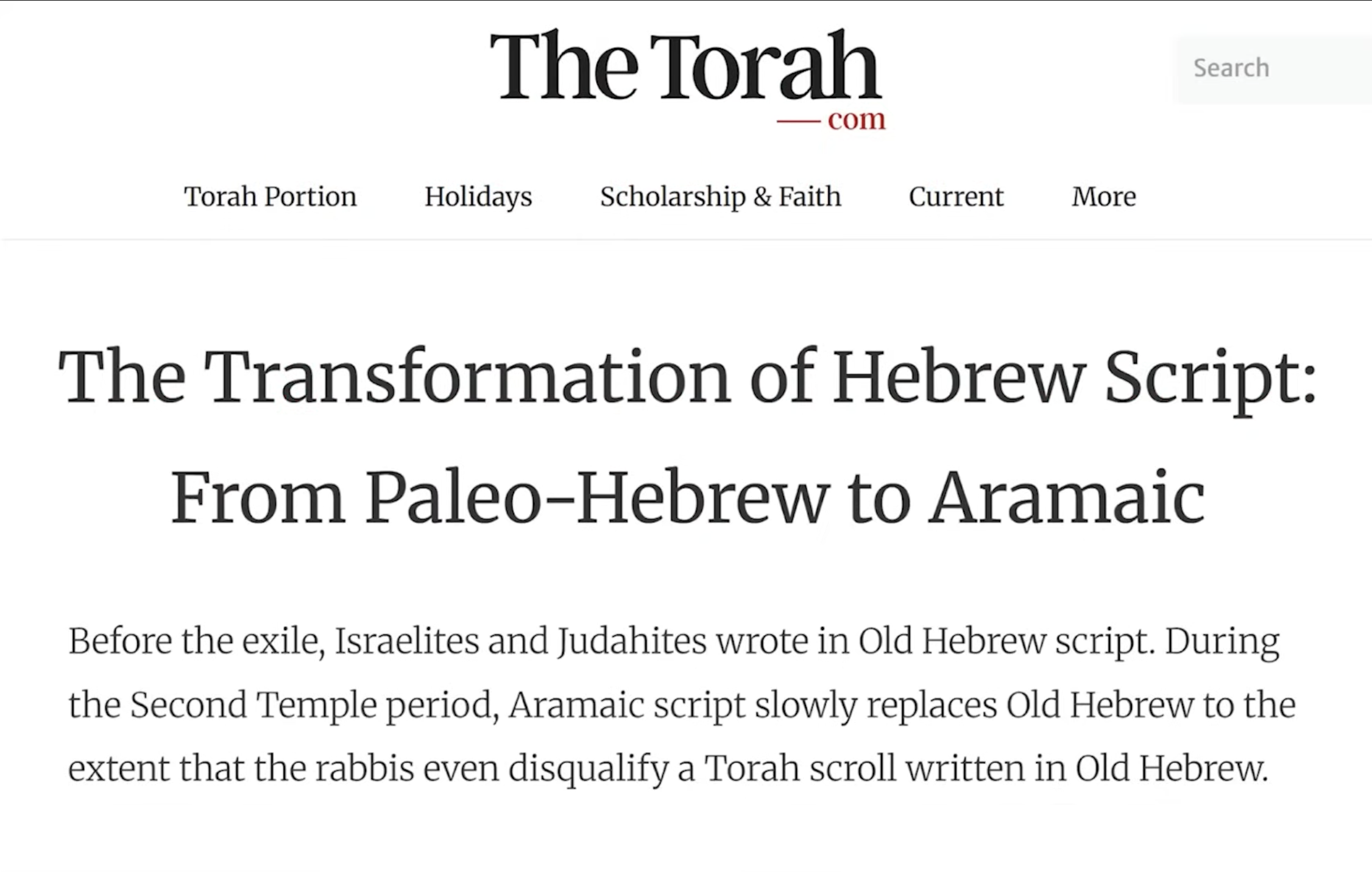
In the Bible, God let this happen as their punishment because they started worshipping demons, and sacrificing their babies to Moloch. During this captivity the Jews totally abandoned their original language and quickly adapted the Babylonian language called Aramaic. The people that insist that Hebrew was the language of the Jews during the life of Jesus fail to understand that what most people call Biblical Hebrew is really just Aramaic. Modern Hebrew script is nearly identical to Aramaic script. Many centuries later when Jesus was born Aramaic had become very limited spoken only by the Jews in Jerusalem. While Greek had become very dominant especially for thousands of Jews outside Judea, which, greatly outnumbered the Aramaic speaking Jews in Jerusalem.
During the time of Jesus’ life and ministry Jesus and his apostles used the Greek Septuagint Old Testament as their main scripture. We know this because Jesus and his apostles quoted the Greek Old Testament Septuagint word for word. In 285 BC King Ptolemy II of Philadelphius commissioned 72 Israelites, 6 from each tribe, to translate the Hebrew Scriptures into the Greek language. By 150 BC the Septuagint LXX Old Testament became the favourite Jewish translation by even the high priests in Jerusalem. With a copy in every synagogue in the world by the time Jesus was born. The Greek Septuagint is over 1000 years older than the Masoretic text Old Testament which was written in the modern Hebrew language that was invented centuries after the life and ministry of Jesus. Jesus and his apostles spoke Greek and Aramaic but no one at that time was speaking Paleo Hebrew because it was dead.
In the following centuries after the crucifixion of Jesus the descendants of the Pharisees called Masorets began writing a new Old Testament Bible in a new invented script that was heavily inspired by Aramaic characters. This new Hebrew 2.0 script was designed to be an occultic cabalistic language for hidden magic codes, divination and a form of numerology called ‘Gematria’. It was a strange deviation from the original Paleo-Hebrew script of Moses.
So, now that we know why every single one of the original New Testament manuscripts were written in Greek we can also clarify that yes, the name of Jesus was and always has been Jesus! If we examine all of the 5255 known original New Testament manuscripts we see that every single writer wrote the name of Jesus as the Son of God.
But wait, if the letter ‘J’ wasn’t invented until the 1600s how could his name be pronounced Jesus using the ‘J’ sound?
The answer to this is so simple. William Tyndale translated the very first English bible in 1525AD. As a Greek scholar he translated from the original Greek New Testament manuscripts. At that time the letter ‘J’ didn’t exist in the Greek or the English languages. However, even though the letter ‘J’ wasn’t invented yet the sound of the ‘J’ was absolutely used. The pronunciation rule was that if the letter ‘I’ was placed before a vowel then it would create the ‘J’ sound. For example, in 1611 King James was the ruler even though his name was spelled ‘Iames’ Also, even though the word Jew was spelled ‘Iewe’ it was still pronounced with the ‘J’ sound exactly as we speak it today. The same rule was applied in Greek during the time of Jesus. This usage of ‘I’ to represent the ‘J’ sound before a vowel was part of the linguistic practice of the time where the letter ‘I’ served multiple phonetic functions depending on its’ position in a word.
So now we can finally put to rest all the silly ideas that we need to call Jesus something else.”
However, there is more and the allegation goes like this. The name that was used by Moses and the Israelites ‘Yahowah’ was lost to scripture when the scriptures were translated into Greek as the Greek language did not have either the characters or the sounds to express the name. Every time ‘Yahowah’ appeared a placeholder name was used to remind the reader to speak the name that was not unutterable but untranscribable. Effectively, what that meant was that Yahowah’ became oral knowledge only. As the decades and centuries passed, ‘Yahowah’ became a lost name orally and more importantly lost to the scriptures no longer being passed down in written record. No doubt the further one strayed from the Temple the further one strayed from the knowledge and use of this name and as Greek and Aramaic became the common languages it effectively passed out of living memory.
At this point it might be interesting for you dear reader to know that a group claims to have remedied this historical loss. How?
2000+ years later suddenly a name is hauled out of where exactly? Here is a blurb from the crew:
“Our vision is to faithfully proclaim יהוה and his word throughout the world by means of all our publications. Our primary means though is through the translating, printing and publishing of a literal translation of “The Scriptures” that is as accurate as we can make it.
We have restored the name of the Father (יהוה) and his Messiah (יהושע) while also preserving the Hebraic mind-set of the original writers, to the best of our ability. In so doing we hope that it will shed further light on the understanding of the message of the Scriptures, thereby spiritually enriching the lives of its readers. Such a translation would be subject to on-going revision, as the ISR continues its quest to make it more and more accurate.”
However, be forewarned:
“I am disappointed to see people still take ISR seriously after decades of promoting this thing. It’s not an original translation, it’s an amended KJV. The original editor had no training in Biblical languages or Bible translation, and promoted numerous unbiblical ideas and conspiracy theories. The translation is riddled with bias and awkward readings, such as “slaughter place of incense” instead of “altar of incense” (because the original editor believed “altar” to be a pagan word). Other words excluded are “holy” and “church” for no reason other than the editor’s witch-hunt against this alleged “pagan influence.” I own three physical copies of the ISR 2009 and have spent quite a bit of time reviewing it (as well as the 1998 revision). It is awful and should not be trusted as a faithful English translation. If you really want a Messianic Bible, go with the TLV.” Jonathan Brown
“As others have said, I am disappointed that not only do people still take the ISR seriously, but that Logos would publish such a destructive and heretical work. The original editor was what many consider a “sacred-name-only” proponent, refusing to include common English words like “Christ”, “church”, “altar”, and even “God” & “Lord” so that “words and names, as far as possible, have been corrected in order to eliminate any names of idolatrous origin.” This translation makes a point to promote a low Christology, such as its butchering of Romans 10:9—”That if you confess with your mouth the Master יהושע and believe in your heart that Elohim has raised Him from the dead, you shall be saved.” and Titus 2:13‘s use of the Granville Sharp Rule—”13looking for the blessed expectation and esteemed appearance of the great Elohim and our Saviour יהושע Messiah,” This “translation” is pseudo-scholarship and should not be featured on Logos, as its intention is to dissuade faithful members of the Church to forsake true, biblical Christology and to embrace the everything-is-pagan conspiracies riddling the internet.” Joshua Ensley
Now, all of this opens up some pretty meaty and fascinating questions. It remains a mystery why there is still to this day so much emphasis on the Masoretic text. However, perhaps it is not such a mystery anymore given the fantastic research of BenBornAgain. ‘Hebrew Idolatry’ (Hebrew trumps all), remains the stumbling block. However, even though the names of The Father ‘Yahowah’ and The Son ‘Yahowsha’ make simple, clear, concise, logical and perfect theological sense and restore the right relationship between them as ‘Elohim’ (two united in singular purpose contrary to centuries of ‘Trinity’ garbage from the Roman Catholic Church), other challenges arise. Primary is the assertion that if one does not know their names one is not part of their family. Now maybe this is true, and you dear reader are now advised. Or maybe, I have only come to know this as a flow-on of gifts of the Spirit post-baptism? All the historical and theological knowledge is wonderful but, is that really for the broad masses? One has to wonder why it is that the name of ‘Jesus’ is perhaps the most famous in the world? Why has The Father allowed this development? Has anyone ever been called or baptised in the name of ‘Yahowsha’? In point of fact, when I put this question to Mr Coombs I received no reply. Furthermore, if we are saved by knowledge of a lost name, then we are not saved by ‘Yahowsha’ Jesus Christ the anointed Messiah which, leaves us at the foot of the tree of knowledge; saved by a mystical magical name. Sounds like Kabbalah magic to me.
Nonetheless, these lost names raise an interesting question as to what the angel would have actually told Mary:
“And, behold, thou shalt conceive in thy womb, and bring forth a son, and shalt call his name JESUS.” Luke 1:31 KJV
If it were indeed that Mary were told to call Him ‘Yahowsha’, that would have been quite the name to carry around, especially on the run! Was there a period of using ‘Yashua’/’Joshua’ for the purpose of being incognito? So, it is an interesting question: “What was spoken v what was written – and by whom?”
Further, if this name ‘Yahowah’ is the name that was revealed to Moses, is it a name that was revealed to or effectively ever spoken back in the days of Adam, Seth or Noah? Again, when I put this question to Mr Coombs I received no answer. Is it actually a ‘Hebrew’ name at all or is it simply how a certain concept was communicated at that time using the language that was available? To be blunt, did Justin Martyr have a point that perhaps God actually has no name; why would the eternal self-existent one have a name?
So, unfortunately all of this of course means that much of what we had to endure on this multi-year goose chase that led to potentially terrible ends such as striking out the name of Jesus (no doubt the end goal of some nefarious anti-Christ group), represents centuries of the very same and at the institutional level. Thus, I will happily encourage you once again to pull up a chair and prepare to have your socks knocked off by BenBornAgain with a thorough work that makes my inquiry look like the part-time research it is. The fascinating story that awaits you on the destruction of scripture and the birth of ‘Hebrew idolatry’ will be well worth your time. For indeed we are now besieged in what BenBornAgain calls the ‘Hebrew Name-Game’ and what a game it is!
“Who hath ascended up into heaven, or descended? who hath gathered the wind in his fists? who hath bound the waters in a garment? who hath established all the ends of the earth? what is his name, and what is his son’s name, if thou canst tell?” Proverbs 30:4 KJV
“For though there be that are called gods, whether in heaven or in earth, (as there be gods many, and lords many,) But to us there is but one God, the Father, of whom are all things, and we in him; and one Lord Jesus Christ, by whom are all things, and we by him.” 1 Corinthians 8:5,6 KJV
POST-SCRIPT:
Having had a little more time to mull these allegations over, I noticed something I hadn’t and here it is:
“We have restored the name of the Father (יהוה) and his Messiah (יהושע) while also preserving the Hebraic mind-set of the original writers, to the best of our ability.”
Ok, so here we have a group trying to insist upon a name for The Father and for His Messiah, but notice they are using modern Hebrew script, a script that did not exist prior to or even during the Second Temple period and only developed centuries after the destruction of the Second Temple in 70AD. Once again we have a case of ‘Hebrew Idolatry’ being dangled in our face with the suggestion ‘we have restored the name.’ How would they actually know these names? The original scriptures that pre-date the Septuagint LXX are all lost, or possibly destroyed intentionally. So how would they know this name? By what means do they make this claim? The only answer is they reasoned it by determining grammatical likelihoods and winnowing down the possible options and rendering it in modern Hebrew text.
Readers, I’ll leave you to ponder what sounds like Orc mischief to me.
Speaking of Orc mischief, just to demonstrate how far scoundrels will go to corrupt and spread blasphemous rubbish, just yesterday I received an advert for the YAHWEH Coin. Yes, you heard that correctly, the YAHWEH Coin. The coin bears a strong image of Christ, obviously not at all Jewish in appearance but Caucasian with the name YAHWEH in capitals and MOST HIGH split on either side. It’s a silver coin and obviously targeting those concerned for financial oblivion in these days of crumbling banks and global fiat. The money lenders will deploy all manner of tricks to spread their lies. Apparently my screen shot of the coin will not load for your viewing pleasure here. Buyer beware.
Below are a series of links that may be of use in regards to establishing that the Masoretic Text is actually garbage, and that therefore, most English Bibles have corrupt Old Testaments which were indeed based upon the flawed Masoretic Text.
Paleo-Hebrew: Why Its True Pronunciation Cannot Be Known https://www.teotwministries.com/post/…
300 BC – The Death of the Hebrew Language https://bible.ca/manuscripts/Septuagi…
Barry Setterfield Research on Septuagint LXX & Council of Jamnia https://www.barrysetterfield.org/Sept…
When God Spoke Greek: The Septuagint and the Making of the Christian Bible – Timothy Michael Law https://a.co/d/7HoXtqs
The Greek New Testament: Its Present and Future Editions, Kurt Aland Journal of Biblical Literature Vol. 87, No. 2 (Jun., 1968), pp. 179-186 (8 pages) https://www.jstor.org/stable/3263347
Our God’s Name is not YAH, YAHWEH, or JEHOVAH https://christianobserver.net/our-god…
The Fallibility of the Hebrew Masoretic Text https://www.uncomplicatedchristianity…
Jerome: “Hebrew Truth” Medieval Christian Views of Hebrew as the Language of Magic https://journal.interpreterfoundation…
Buy the Septuagint LXX here.
 Holy Bible Truth Seekers