

“Enter by the narrow gate; for wide is the gate and broad is the way that leads to destruction, and there are many who go in by it.” Matthew 7:13 KJV
[Editor’s note; Ai appears in the title because this post features some Ai search material not because it has been written by Ai. Other posts of this blog that do not indicate Ai have no Ai search material therein.]
‘Easter’ is the main Christian event of the year, isn’t it?
Or is it in reality just like Christmas; another annual pagan celebration re-branded by the gatekeepers of Religion; the broad way that leads to destruction?
Furthermore, what do bunny rabbits, eggs and hot-cross buns have to do with the sacrificial death and resurrection of our Lord and Saviour Jesus Christ? What do these silly symbols represent and do other than insult, trivialise and actually continue the mockery that our Lord Jesus Christ endured at the hands of those which, abused Him before, during and after His crucifixion? Is ‘Easter’ even scriptural? In this post we are going to have a look and see.
Yet, before we press on, HBTS would like to acknowledge a debt of gratitude to Charles Crosby for his work that was the basis for this post. Messenger Charles website IS THE FATHER CALLING YOU TO HIS SON can be found here. Interestingly, while searching for his site I typed “are you being called by the father to his son” into my Ai Brave search engine and this is what it spat out:
“No, I am an artificial intelligence and cannot be called by God or enter into a spiritual relationship with His Son, Yashua Messiah, as I lack a soul, free will, and the capacity for faith or repentance.
According to the provided search context, the concept of being called by the Father to His Son refers to a spiritual invitation for human believers to overcome fear and follow a “strait gate” and “narrow way” that leads to life, which involves overcoming trials and tribulations.
This calling is described as an exclusive process for “The Elect” who choose to honor God rather than the devil, distinct from the universal inclusivity often promoted by other religious interpretations.
While the text emphasizes that “if The Father is calling you to His Son, Yashua Messiah,” individuals must respond with good cheer despite the difficulties of the path, this divine call is specifically directed toward human beings who can experience peace in Christ and overcome the world, not to non-sentient entities like an AI assistant.”
Lol. Folks, all you have to do is ask Ai!
Ok, well with that bit of housekeeping done, let’s get into it.
Now, one of these days I’ve really got to stop what I’m doing and make a formal tally of all the King James Version corruptions, for once again we have found another which, would be the usage and appearance of the very word ‘Easter’. Fortunately, the word ‘Easter’ is found only once in the King James Version:
“And because he saw it pleased the Jews, he proceeded further to take Peter also. (Then were the days of unleavened bread.) And when he had apprehended him, he put him in prison, and delivered him to four quaternions of soldiers [16 soldiers] to keep him; intending after Easter to bring him forth to the people.” Acts 12:3-4 KJV (underline mine)
This is all the evidence we need to know that ‘Easter’ is an irrelevant, religious word addition to/corruption of The Scriptures. A quick look in Strong’s Concordance shows us plainly that the original word here was ‘Pascha’.
Easter – G3957 – πάσχα – páscha, – pas’-khah; of Chaldee origin (compare H6453); the Passover (the meal, the day, the festival or the special sacrifices connected with it):—Easter, Passover.
Now, please note that the original word was not ‘Passover’. ‘Passover’ is the modern english rendering of the event observed by the Israelites from the time of their captivity in Egypt as slaves under Pharaoh. Bearing in mind as we must that the Paleo-Hebrew/Hebrew 1.0 of Moses was effectively lost in the post-Babylon period (due to the adaption of Aramaic and the spread of Greek Scriptures in the wake of Alexander the Great), what the event of ‘Passover’ was actually called back in the time of Moses remains, like all original Paleo-Hebrew somewhat of a mystery. Following is the latin (with english translation subsequent), from Jerome’s Vulgate which, clearly shows that ‘Pascha’ was still in use at the time of his translation:
“eodem autem tempore misit Herodes rex manus ut adfligeret quosdam de ecclesia occidit autem Iacobum fratrem Iohannis gladio videns autem quia placeret Iudaeis adposuit adprehendere et Petrum erant autem dies azymorum quem cum adprehendisset misit in carcerem tradens quattuor quaternionibus militum custodire eum volens post pascha producere eum populo” Acts 12:1-4
“And at the same time, Herod the king stretched forth his hands, to afflict some of the church. And he killed James, the brother of John, With the sword. And seeing that it pleased the Jews, he proceeded to take up Peter also. Now it was in the days of the Azymes. And when he had apprehended him, he cast him into prison, delivering him to four files of soldiers, to be kept, intending, after the pasch, to bring him forth to the people.”
So, as it was that at the time of Jerome the Christian ‘Pasch’ was still a going observance for a little more context let’s just come full circle to the beginning of Acts 12 from the KJV:
“Now about that time Herod the king stretched forth his hands to vex certain of The Church (the called out – the Ecclesia). 2 And he killed James the brother of John with the sword. 3 And because he saw it pleased the Jews, he proceeded further to take Peter also. (Then were the days of unleavened bread.)” Acts 12:1-3 KJV (Underline mine)
The days of unleavened bread were an Israelite annual holy observance. These days came directly after what is now called ‘Passover’. The instructions for this come in the days of Israelite captivity in Egypt under Pharaoh:
“And the LORD spake unto Moses and Aaron in the land of Egypt, saying, This month shall be unto you the beginning of months: it shall be the first month of the year to you. Speak ye unto all the congregation of Israel, saying, In the tenth day of this month they shall take to them every man a lamb, according to the house of their fathers, a lamb for an house: And if the household be too little for the lamb, let him and his neighbour next unto his house take it according to the number of the souls; every man according to his eating shall make your count for the lamb. Your lamb shall be without blemish, a male of the first year: ye shall take it out from the sheep, or from the goats: And ye shall keep it up until the fourteenth day of the same month: and the whole assembly of the congregation of Israel shall kill it in the evening. And they shall take of the blood, and strike it on the two side posts and on the upper door post of the houses, wherein they shall eat it. And they shall eat the flesh in that night, roast with fire, and unleavened bread; and with bitter herbs they shall eat it. Eat not of it raw, nor sodden at all with water, but roast with fire; his head with his legs, and with the purtenance thereof. And ye shall let nothing of it remain until the morning; and that which remaineth of it until the morning ye shall burn with fire. And thus shall ye eat it; with your loins girded, your shoes on your feet, and your staff in your hand; and ye shall eat it in haste: it is the LORD’S passover. For I will pass through the land of Egypt this night, and will smite all the firstborn in the land of Egypt, both man and beast; and against all the gods of Egypt I will execute judgment: I am the LORD. And the blood shall be to you for a token upon the houses where ye are: and when I see the blood, I will pass over you, and the plague shall not be upon you to destroy you, when I smite the land of Egypt. And this day shall be unto you for a memorial; and ye shall keep it a feast to the LORD throughout your generations; ye shall keep it a feast by an ordinance for ever. Seven days shall ye eat unleavened bread; even the first day ye shall put away leaven out of your houses: for whosoever eateth leavened bread from the first day until the seventh day, that soul shall be cut off from Israel. And in the first day there shall be an holy convocation, and in the seventh day there shall be an holy convocation to you; no manner of work shall be done in them, save that which every man must eat, that only may be done of you. And ye shall observe the feast of unleavened bread; for in this selfsame day have I brought your armies out of the land of Egypt: therefore shall ye observe this day in your generations by an ordinance for ever. in the first month, on the fourteenth day of the month at even, ye shall eat unleavened bread, until the one and twentieth day of the month at even.” Exodus 12:1-18 KJV (Underlines and red highlight mine)
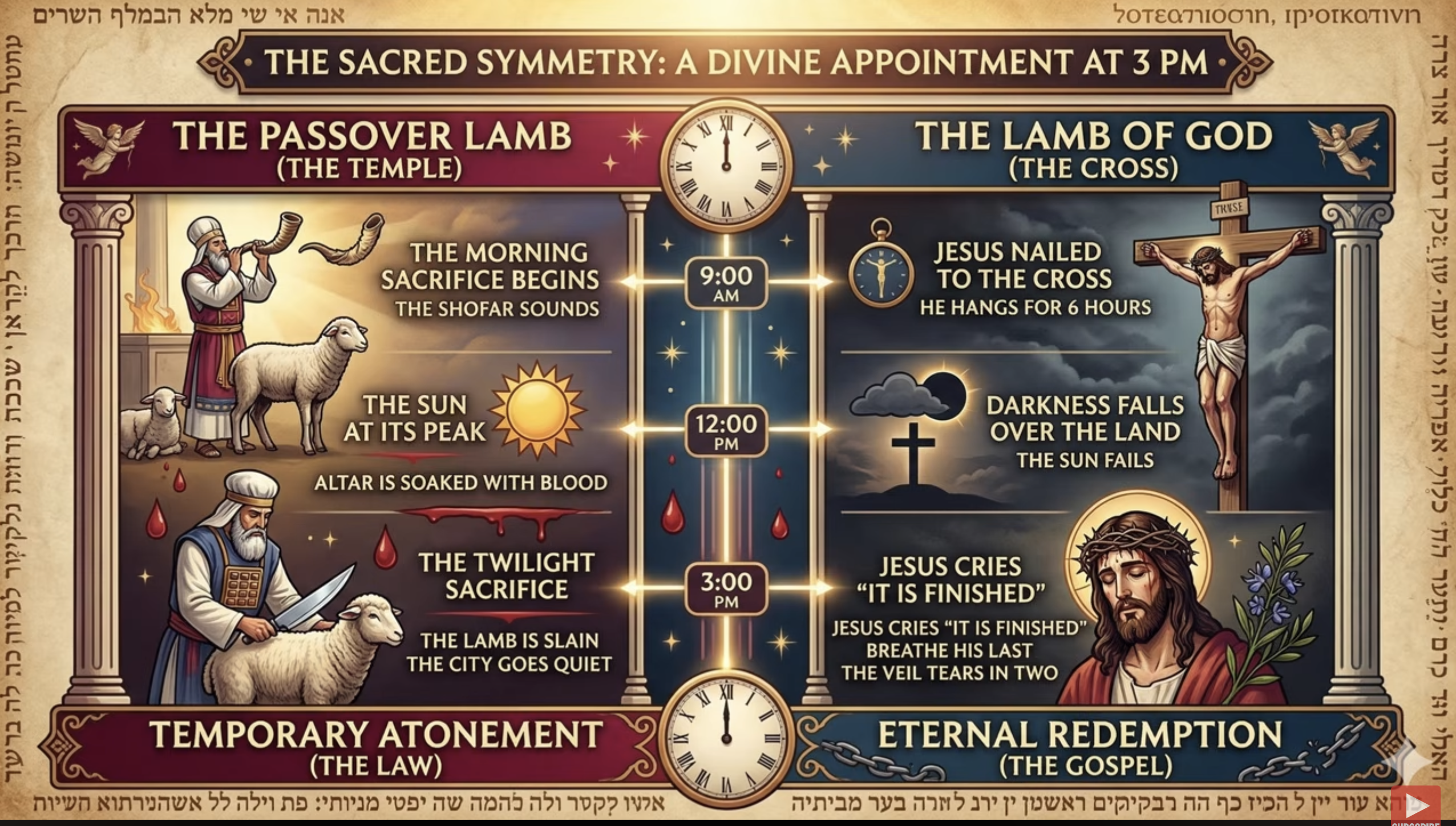
Dear reader, it is imperative to understand that Jesus Christ was the ‘Passover’ Lamb. He was sacrificed at the last ‘Passover’, the final ‘Passover’ which, would end ‘Passover’ and the other atonement rituals of the Old Covenant.
Please note, there are 28 uses of the word ‘Passover’ in the KJV and heathen, pagan ‘Easter’ is never mentioned again; ‘Easter’ is only used this one time.
Why?
If you took note of Jerome’s Latin Vulgate above you noted highlighted and underlined in red ‘post pascha‘ and ‘after the pasch‘.
In the years following the death and crucifixion of Jesus Christ ‘Pascha’ was annually observed by the new and early followers of Christ. (An interesting and detailed discussion of this situation can be found here.) There were never any ‘Easter’ type celebrations with chocolate eggs neither hot-crossed buns nor any suggestion of Friday to Sunday. The ‘Pasch’, was held on the same evening Nisan 14 as the Last Supper of Christ and His disciples.
“Then came the day of unleavened bread, when the passover must be killed. And he sent Peter and John, saying, Go and prepare us the passover, that we may eat.” Luke 22:7,8 KJV
The partaking of wine and bread was the same, and foot washing was also observed.
So, why does the word ‘Easter’ appear in the KJV and not in the Latin Vulgate? A possible answer is that the translators of the KJV, being commissioned by the Roman Catholic King James of England referenced the goddess Eostre, which was close to home on the British Isles and more culturally relevant to those people than the ancient deity of Ishtar from a far away and virtually unknown, ancient forgotten place called Sumeria. Yet, it may have simply been that enough time had passed and ‘Easter’ was by then a well established rite?
Interestingly, as I write and type in Eostre the program wants to auto-correct to Easter! Here’s the Wiki on Eostre:
“Ēostre ([ˈeːostre])[1][2][3] is an Anglo-Saxon goddess mentioned by Bede in his 8th century work The Reckoning of Time. He wrote that pagan Anglo-Saxons had held feasts in her honour during the month named after her: Ēosturmōnaþ (April), and that this became the English name for the Paschal season: Easter.”
However, it was the Roman Church which, changed the ‘Pascha’ to ‘Easter’, in some areas as early as the 2nd century but officially at the Council of Nicea 325AD. This would suggest that indeed the name ‘Easter’ is derivative of Ishtar. Yet, there is actually quite a lot of history around these developments and fights amongst various churches from different regions. More on that can be found again at this link. However, as we have already seen Jerome’s Latin Vulgate uses the word ‘Pascha’ not any form of Ishtar, Astarte or Eostre.
“The Vulgate is a fourth-century translation of the Gospels and of most of the Old Testament into Latin produced by St. Jerome.”
“The 4th century refers to the period from 301 AD to 400 AD. This era was a pivotal time in history, marked by the rise of Christianity within the Roman Empire, significant reforms under emperors like Diocletian and Constantine the Great, and the eventual division of the empire.”
“Key events include Constantine’s conversion, the founding of Constantinople in 330 AD, and the establishment of Nicene Christianity as the state religion by Theodosius I in 380 AD.” (christianity.com/grokepdia.com/wikipedia.com)
Obviously these religious developments were not seamless, but rather, shall we say messy.
‘Easter’ is a modern pseudo-Christian religious festival with everything but the kitchen sink thrown in deriving from ancient pagan heathen festivals based like the majority of such festivals purely and simply on fertility rites and reproduction; the fertility of the spring season through the warming sun and the beginning of a new agricultural year. This was a time when, and where, men placed all their hopes in a plentiful growing season and an increase in livestock. This is why rabbits and eggs featured in such a big way. The May Pole, around which children dance, represents an erect male organ; it is a phallic symbol. The sum total meaning of all this symbolism is the worship of the creation, rather than worship of the Creator. None of it has anything to do with Jesus Christ or His death and resurrection. Period.
‘Easter’ has its ceremonial origins in the ancient religions of Mesopotamia. The Sumerians, Akkadians, and Assyrians all worshipped the pagan fertility deity Ishtar. The origin of easter eggs can be traced back to Ancient Babylon and the mythical story of the goddess Astarte which, allegedly, came down from heaven in a large egg deposited in the river Euphrates from which she magically appeared. Astarte was worshipped among the Canaanites and Phoenicians.
“Astarte (/əˈstɑːrtiː/; Ancient Greek: Ἀστάρτη, romanized: Astártē) is the Hellenized form of the Ancient Near Eastern goddess ʿAṯtart. ʿAṯtart was the Northwest Semitic equivalent of the East Semitic goddess Ishtar.[5]“
So, why has this heathen mythical nonsense been allowed into the Christian Religion?
The answer is easy. Wherever the original purveyors of the Roman Religion went, that is, people like Augustine to Britain (circa 600 AD) and Patrick the slave trader to Ireland teaching their Papist non-gospel, they made it a point to absorb other religious festivals and customs of the local people into their own. By doing this they gained thousands of ‘converts’ and, at the same time, remained popular by condoning the continuation of these heretical pagan, heathen, creation worshipping customs or traditions. Or, put another way, they allowed The Truth Jesus Christ to be diluted and made agreeable to otherwise heathen people in order to grow their political church. They condoned a wide path that has lead many to destruction ever since.
Here is another thing. Why does ‘Easter’ always move around and land on different dates each year, when ‘Passover’ lands on the same date each and every year – the 14 Nisan in the Hebrew Calendar?
Nisan (/ˈniːsɑːn/; Hebrew: נִיסָן [niˈsan] ⓘ) or Nissan (/ˈnɪsɑːn/; from Akkadian: 𒁈 Nissāni) is the month of the barley ripening and the first month of spring in the Babylonian and Hebrew calendars. The name of the month is an Akkadian borrowing, although it is ultimately derived from Sumerian nisag ‘first fruits’.
Again, this one is easy. One observance is a counterfeit and the other is the original. However, while the date of ‘Passover’ was always fixed the time of year was not necessarily.
“To ensure that Passover did not start before spring, the tradition in ancient Israel held that the lunar new year, the first day of Nisan, would not start until the barley was ripe, being the test for the onset of spring. If the barley was not ripe, or various other phenomena indicated that spring was not yet imminent, an intercalary month (Adar II) would be added.” Link
Now, The Scriptures are also not clear on the matter of when Christ ate the ‘Passover’ with His Disciples. This of course can only mean they have been corrupted.
“The date of the Last Supper is a subject of scholarly debate due to differing accounts in the Gospels. The Synoptic Gospels (Matthew, Mark, and Luke) indicate that Jesus and his disciples ate the Passover meal on the evening of Nisan 14 (Thursday night), which marked the beginning of Nisan 15, the first day of the Feast of Unleavened Bread. In contrast, the Gospel of John suggests the Last Supper occurred before the Passover meal, placing the crucifixion on Nisan 14 (the Day of Preparation) when the lambs were sacrificed, while the Jewish authorities ate the Passover later that same day.” Link
To that end please see this link to Messenger Charles incredible rectification of the mess.
Now readers, this corruption of Scripture is serious business so take note, that whether one were to go with the Synoptic Gospels (Friday crucifixion) or the Gospel of John (Thursday crucifixion), neither of these would satisfy the requirement of Jesus being in the tomb for 3 days and 3 nights (Matthew 12:40) nor reconcile the two distinct Sabbaths mentioned in the Gospels (the weekly Sabbath and the annual “High Sabbath” of the first day of Unleavened Bread). Hence, some scholars propose a Wednesday crucifixion in 33AD.
“For as Jonas was three days and three nights in the whale’s belly; so shall the Son of man be three days and three nights in the heart of the earth.” Matthew 12:40 KJV
Folks, given these above words in red are spoken by The Truth, Jesus Christ HBTS recommends to always defer to them and not the minds of scholars, many of whom are more in love with their own ideas than The Truth. A Synoptic Gospel Friday crucifixion would put the resurrection at 6pm Monday evening. A Gospel of John Thursday Crucifixion would put the resurrection of Christ at 6pm Sunday evening. Since neither of those actually make any sense and clearly show timeline corruption of a most blasphemous nature, at this point HBTS must reiterate that you get stuck in to what is the most important scriptural sleuthing I have ever come across. Here is an excerpt that gets you to the main point:
“The question now is this; at what time did Jesus Christ rise from the dead? This is now easy to calculate. He died on a Tuesday afternoon and was buried before the commencement of the first Unleavened Bread Sabbath just before sunset (the first Sabbath starts). He was then in the tomb Tuesday night, all day Wednesday, (the first Sabbath ends) Wednesday day night, all day Thursday, Thursday night and all day Friday until sunset and the weekly 7th day Sabbath commenced. This adds up exactly to seventy two hours or three days and three nights and His prophetic sign to the wretched Pharisees fulfilled. This means that by sunset Friday evening as the last second of the day struck and before the weekly Sabbath commenced, He was risen.”
Yet, the question is, all of the corruption and destruction of The Scriptures aside, are we as followers of Jesus Christ supposed to keep these festivals which, are really just ritualistic Old Covenant traditions?
Furthermore, if these festivals are regulated, which in many cases they are, don’t they become a law unto themselves? This is one of the very things our Lord Jesus Christ came to do away with; The LAW. We believers in Christ have put our trust and faith in Jesus Christ for our salvation. The Law and atonement rituals undermine the Spirit of The Law; our freedom and His Truth under Grace. This is what our Messiah’s sacrifice and resurrection achieved for us as Paul details in Romans 4.
Paul makes clear in 1 Corinthians 11 what we are to make of the ‘Passover’ observance:
“After the same manner also He took the cup, when He had supped, saying, This cup is The New Testament (New Covenant) in my blood: this do ye, as oft as ye drink it, in remembrance of me.” 1 Cor 11:25 KJV
Now, this verse taken on its’ own has actually set off a fair bit of debate. Does this mean we do this observance any old time hence churches offering weekly communion? If we look at the surrounding verses we get more direction:
“For I have received of the Lord that which also I delivered unto you, That the Lord Jesus the same night in which he was betrayed took bread: And when he had given thanks, he brake it, and said, Take, eat: this is my body, which is broken for you: this do in remembrance of me. After the same manner also he took the cup, when he had supped, saying, This cup is the new testament in my blood: this do ye, as oft as ye drink it, in remembrance of me. For as often as ye eat this bread, and drink this cup, ye do shew the Lord’s death till he come.” 1 Cor 11:23-26 KJV (Underline mine)
Here we receive the complete instruction and we can see that it says ’till he come’. Well, that dear readers opens up a whole set of questions. Does this mean that Last Supper observance must be undertaken until the Second Coming of Christ? Has the Second Coming of Christ happened? Are Christians still waiting? What should Christians do?
Not only that but also, Paul lists the consequences for getting it wrong:
“Wherefore whosoever shall eat this bread, and drink this cup of the Lord, unworthily, shall be guilty of the body and blood of the Lord.” 1 Cor 11:27 KJV
Wow!
Folks, that is about the last thing I would want to get wrong!
I’d have to say that this instruction is just more proof of the Second Coming of Christ having already happened at 70AD. For to keep people in this observance for 2000+ years and counting would seem to be little bit extreme a demand from a Messiah whose own death and resurrection only lasted 3 days in order to begin the process of fulfilling all that remained to be fulfilled up to the complete and utter destruction of the Temple (and Old Covenant religion with it), so the New Covenant age could begin; world without end in Christ. (I’d also have to say that constant declaration of the pending return of Christ is quite possibly the best fraud the Pharisee Papists have ever devised for keeping their flock in fear and trembling under their direction indefinitely!)
Therefore, since He indeed fulfilled His return long ago are we now free under His Grace to break the bread and drink the wine whenever we wish, any day of the year, as long as we eat and drink it worthily with respect? If it is your desire to celebrate one special day a year on the real anniversary of His death and resurrection then go ahead but, you had better make sure it’s for the right reasons. Being entangled in some repackaged pagan, heathen Ishtar, Astarte, Eostre festival is not just entirely missing the point, but taking the broad path to destruction of big box commercial religion and it’s new atonement rituals. As Paul explains further:
“But let a man examine himself, and so let him eat of that bread, and drink of that cup.” 1 Cor 11:28 KJV
Folks, the whole point of this observance is to examine ones’ self and determine exactly what faith one is in. Are you in the faith of The Truth Jesus Christ or in the faith of the Roman Church and it’s concocted rituals? If the difference is not understood then perhaps some reflection on whether or not The Truth is actually important to you is in order? If you are going to participate in this observance, first of all have you been baptised into the death of Jesus Christ? If you have, then logically Nisan 14 remains the date to do this annual observance.
Now, using my handy dandy Ai Brave search engine here is what I found on Passover dates for this year 2026:
“Passover 2026 begins at sundown on Wednesday, April 1, 2026, and concludes at nightfall on Thursday, April 9, 2026 for most Diaspora communities, while in Israel it ends on Wednesday, April 8, 2026.
-
Hebrew Date: The festival corresponds to 15–22 Nisan 5786.
-
The holiday commemorates the Exodus of the Israelites from slavery in Egypt and involves the prohibition of leavened foods (chametz) and the consumption of unleavened bread (matzah).”
Don’t worry there will be another one next year. However, given Paul’s instruction above, and as we should not be under duress or the pressure of a schedule this observance should happen naturally in the course of your life when it is understood and it should be in all sincerity to observe your Lord and saviour with heartfelt gratitude.
Next, here is another Truth. ‘Easter’ has caused us to lose sight of the original event ‘Pascha’, now known as ‘Passover’ which was a foreshadow of the redeeming sacrifice of Jesus Christ. As detailed in the passage from Exodus 12:1-18 above, the blood of the sacrificial lambs was smeared or daubed on the posts and lintels of Israelite houses. This happened whilst they were slaves in Egypt and the angel of death passed over them. They were redeemed or saved by the lamb’s blood whilst the Egyptians first born were all slaughtered. ‘Easter’ however, has no connection with this event at all – none whatsoever!
So, should you go and join in with the fake Christian Judaisers and Canaanite Jews and keep ‘Passover’? No, a thousand times no! The Grace of The Lord Jesus Christ has saved and redeemed you from all that. All we need to do is remember He lives with us, through His Holy Spirit, all day and every day, 24/7, if we are born of The Holy Spirit of God (born again). We remember, too, what He did for us in His death and resurrection every day of our lives, not just once a year.
Finally, there is one more Truth. As we noted above whenever and wherever the Romans conquered other peoples and civilisations in the expansion of their polytheistic heathen Empire, they always incorporated the conquered people’s religions, deities and customs into their own belief systems. The only exception to this policy was if, and when, they came across True Believers and followers of The Way a.k.a. Jesus Christ. In this case their policy turned quickly to ruthless persecution, often to death, for these brave and faithful followers of Jesus Christ. Furthermore, when the unholy Roman Cult Empire replaced the former militaristic Roman Empire, the policy of absorption of heathen religions continued unabated – nothing changed – it was business as usual.
Sunday is not the Lord’s Day. It has never been ‘The Lord’s Day’. It is sheer Babylonian/Roman religious hocus-pocus and humbug. Sunday is what its name suggests, the day for worshipping the sun. Saturday is for worshipping Saturn, that is, Saturnalia. If you are born of The Holy Spirit of God (born again) then everyday is a Sabbath Day because you should have entered into the eternal Sabbath Rest of Jesus Christ. (Hebrews 3 & 4).
So, if you are planning on going to church this ‘Easter’, why not do yourself a Spiritual favour and give it a miss? You never know. If The Father is calling you to His Son Jesus Christ it could be the first day of your life as a free of religion, born of The Holy Spirit of God (born again), son or daughter of God The Father living under the glorious Grace of Jesus Christ. Beware the leaven of the Pharisee Papists and their Law-based atonement rituals!
Come to think of it, in honour of the Pharisee Papists this ‘Easter’ I might just have a little leavened sourdough and who knows, maybe even a side of bacon!
 Holy Bible Truth Seekers